

Biblical Background
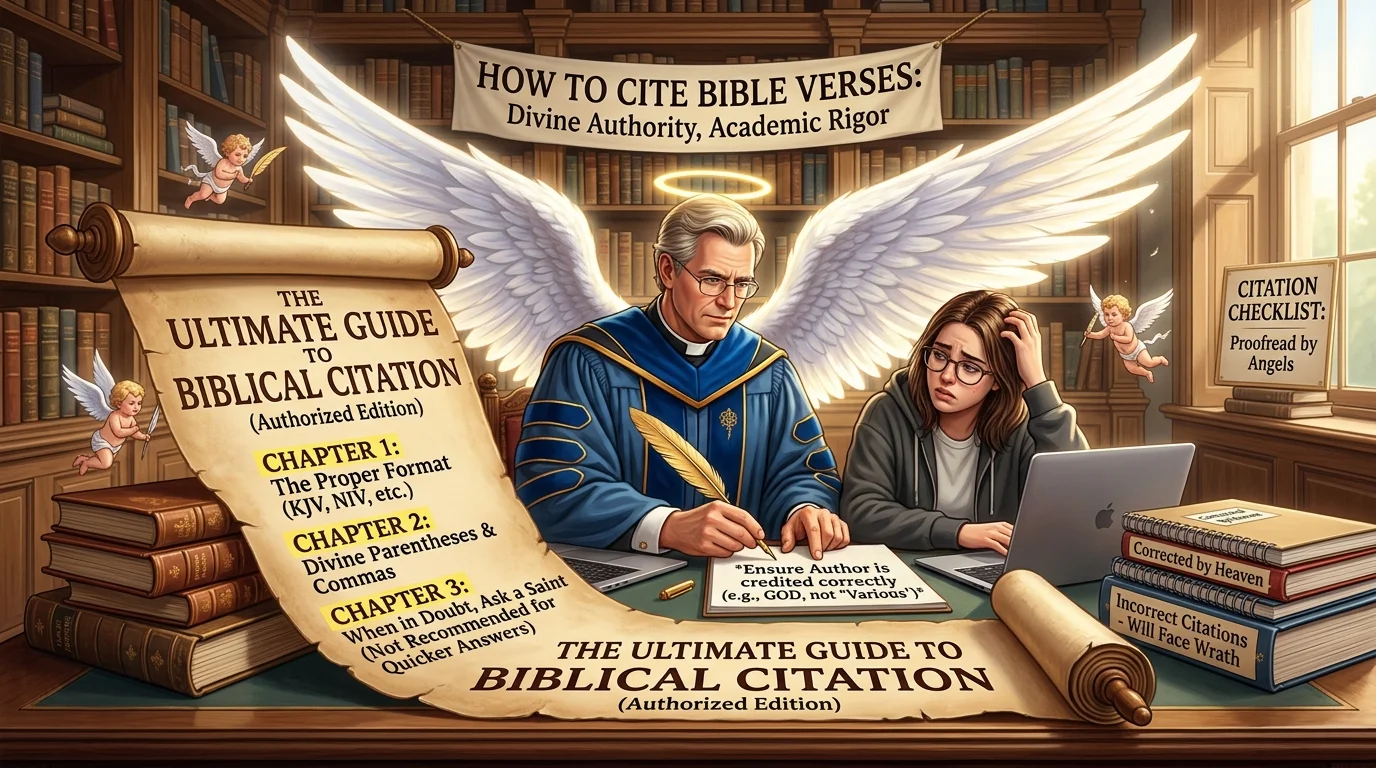
Although the Bible does not teach a formal citation style like MLA, APA, or Chicago, it consistently emphasizes the careful handling of God’s Word. Scripture was written so that God’s people could read, understand, remember, and teach His truth faithfully.
Paul reminded Timothy in 2 Timothy 2:15 (NIV):
“Do your best to present yourself to God as one approved, a worker who does not need to be ashamed and who correctly handles the word of truth.”
This verse highlights the importance of accuracy when studying and sharing Scripture.
The Bereans provide another excellent example. Acts 17:11 (NIV) says,
“Now the Berean Jews were of more noble character… for they received the message with great eagerness and examined the Scriptures every day to see if what Paul said was true.”
Their careful examination reminds believers that biblical references should always be accurate and easy to verify.
Today, proper Bible citations help readers locate verses quickly, compare translations, and study God’s Word in its full context.
Key References from Core Bible Books
Proverbs: Value Wisdom and Accuracy
Proverbs teaches believers to pursue truth and understanding. Proverbs 2:6 (NIV) says,
“For the LORD gives wisdom; from his mouth come knowledge and understanding.”
This book reminds us that careful handling of Scripture reflects wisdom and respect for God’s truth.
Psalms: Treasure God’s Word
Psalm 119:160 (NIV) says,
“All your words are true; all your righteous laws are eternal.”
Psalms emphasizes the reliability of Scripture, encouraging believers to quote and reference God’s Word faithfully.
James: Live Out God’s Word
James 1:22 (NIV) says,
“Do not merely listen to the word, and so deceive yourselves. Do what it says.”
James reminds Christians that citing Scripture accurately should ultimately lead to obedient living.
2 Timothy: Handle Scripture Correctly
Paul’s instruction in 2 Timothy 2:15 is especially relevant because it encourages believers to study and teach God’s Word with care and integrity.
Spiritual Interpretations
God’s Word Deserves Careful Handling
2 Timothy 2:15 (NIV)
“Do your best to present yourself to God as one approved… correctly handles the word of truth.”
Quoting Scripture accurately honors God and helps others trust the message you share. Careful citation reflects a desire to communicate His truth faithfully.
Scripture Points People to Christ
John 5:39 (NIV)
“These are the very Scriptures that testify about me.”
Every Bible reference ultimately points readers toward Jesus. Accurate citations help others explore God’s Word for themselves and grow in their relationship with Christ.
Truth Builds Confidence
Psalm 119:105 (NIV)
“Your word is a lamp for my feet, a light on my path.”
Clear Bible references allow readers to follow along, study the context, and apply God’s truth with confidence.
Teaching Others Is a Sacred Responsibility
Deuteronomy 6:6–7 (NIV)
“These commandments that I give you today are to be on your hearts. Impress them on your children…”
Sharing Scripture accurately helps future generations learn God’s Word with clarity and confidence.
Variations & Related Themes
How to Cite Bible Verses in Everyday Writing
For blog posts, devotionals, church newsletters, and Bible studies, the simplest format is:
- John 3:16 (NIV)
- Psalm 23:1 (ESV)
- Romans 8:28 (NKJV)
Include the translation abbreviation after the reference if you are quoting directly.
How to Cite Multiple Bible Verses
When citing more than one passage, separate them with semicolons:
- John 14:6; Romans 10:9; Ephesians 2:8–9 (NIV)
If the verses come from the same book, list them like this:
- Psalm 23:1–4; 27:1 (NIV)
How to Cite Bible Verses in Academic Papers
Most schools follow a style guide such as MLA, APA, Chicago, or Turabian. While each has slight differences, they generally include:
- Book name
- Chapter
- Verse(s)
- Bible translation
For example:
- John 3:16 (New International Version)
Always follow the formatting rules required by your instructor or publisher.
Faith-Based Action Steps
Pray Before Studying Scripture
Prayer:
“Heavenly Father, thank You for giving me Your Word. Help me study the Scriptures carefully, understand them correctly, and share them faithfully with others. Give me wisdom to handle Your truth with humility and love so that everything I write and teach honors You. In Jesus’ name, Amen.”
Develop Good Study Habits
Ask yourself:
- Am I reading Bible verses in their full context?
- Have I identified the correct chapter and verse?
- Did I note the Bible translation I am quoting?
Taking a few extra moments to verify references helps ensure accuracy.
Learn From Trusted Christian Resources
Study the Bible with your local church, a trusted pastor, or a faithful Bible study group. Reliable study Bibles and respected commentaries can also help you understand Scripture before quoting or teaching it.