

Biblical Background
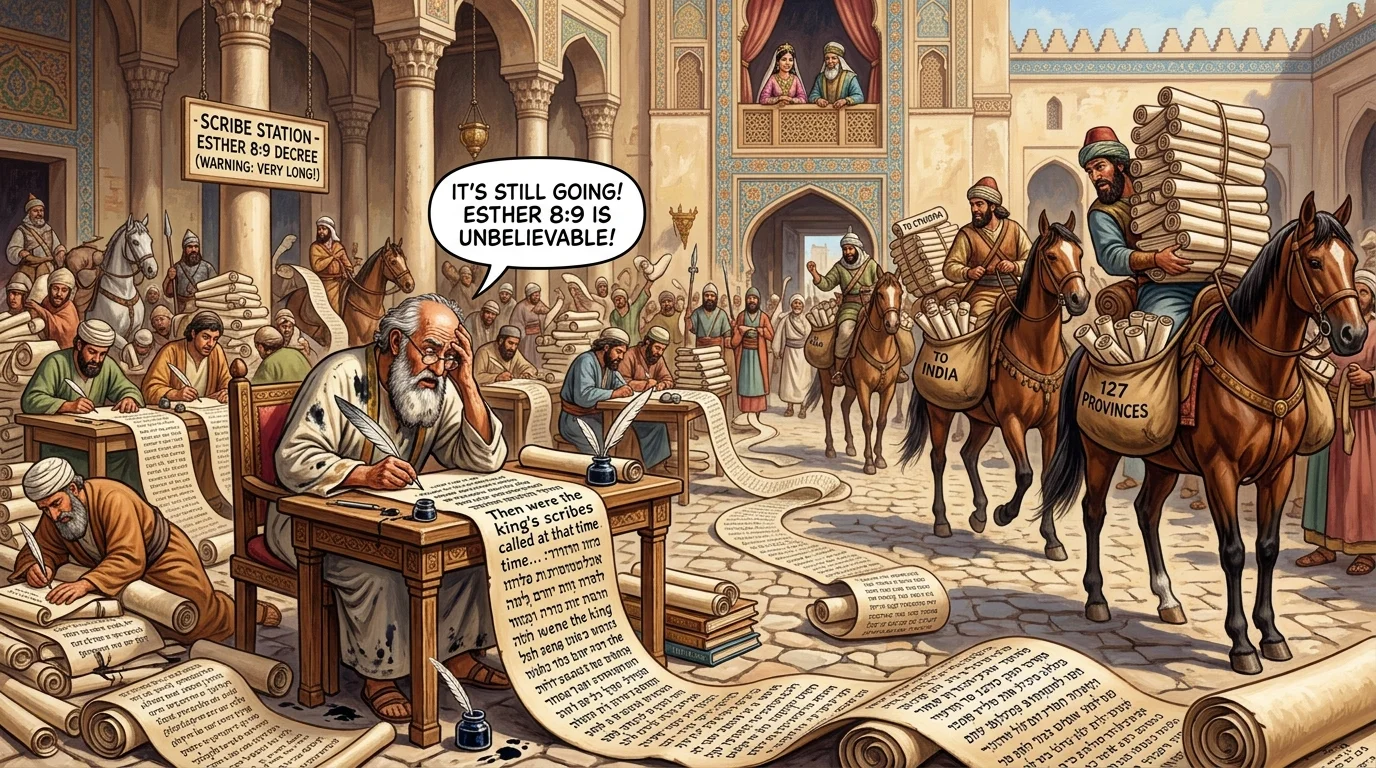
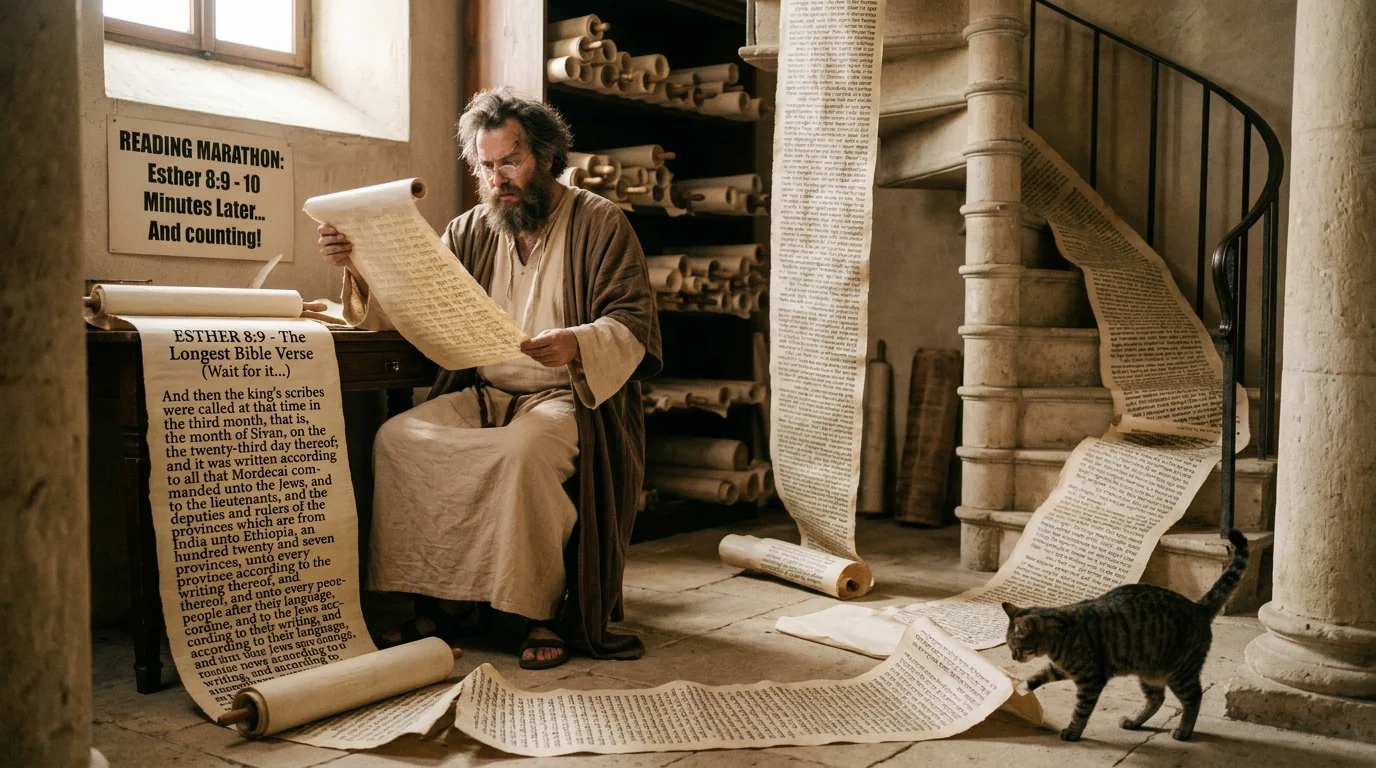
The verse generally recognized as the longest verse in the Bible is Esther 8:9. Depending on the Bible translation, the exact number of words varies, but it is widely considered the longest individual verse because of its detailed description of the king’s decree and the many provinces, languages, and peoples who received it.
Esther 8:9 (NIV) begins:
“At once the royal secretaries were summoned—on the twenty-third day of the third month, the month of Sivan…”
The verse continues by describing how Mordecai’s decree was written and distributed throughout King Xerxes’ vast Persian Empire. The unusually long verse reflects the enormous scope of the empire and God’s providential work in preserving the Jewish people.
The book of Esther never explicitly mentions God’s name, yet His guidance is evident throughout the story. Through Queen Esther’s courage and Mordecai’s wisdom, God protected His covenant people from destruction. The length of Esther 8:9 serves the narrative by emphasizing the widespread reach of the king’s official message.
Rather than focusing only on its size, readers should appreciate how this verse fits into the larger story of God’s faithful care for His people.
Key References from Core Bible Books
Esther: God’s Providence at Work
The book of Esther provides the Bible’s longest verse in Esther 8:9. This passage records the widespread distribution of a royal decree that allowed the Jewish people to defend themselves.
Esther is especially relevant because it demonstrates God’s unseen guidance even when His name is not directly mentioned.
Psalms: God’s Word Endures Forever
Psalm 119:160 (NIV) says,
“All your words are true; all your righteous laws are eternal.”
Psalms reminds believers that every part of Scripture, whether long or short, is trustworthy and everlasting.
Proverbs: Seek Wisdom Through Scripture
Proverbs 30:5 (NIV) says,
“Every word of God is flawless; he is a shield to those who take refuge in him.”
Proverbs teaches that each word of Scripture carries value because it comes from God.
Hebrews: The Living Word of God
Hebrews 4:12 (NIV) declares,
“For the word of God is alive and active. Sharper than any double-edged sword…”
Hebrews emphasizes that the power of Scripture lies not in its length but in its divine authority and transforming work.
Spiritual Interpretations
Every Word of Scripture Has Purpose
2 Timothy 3:16 (NIV)
“All Scripture is God-breathed and is useful for teaching, rebuking, correcting and training in righteousness.”
Whether a verse contains only a few words or many sentences, God inspired every part of His Word. Each passage contributes to His message of truth and salvation.
God Works Through Ordinary Details
Romans 8:28 (NIV)
“And we know that in all things God works for the good of those who love him…”
Esther 8:9 contains many historical and administrative details that may seem ordinary at first. Yet these details reveal how God worked through real events and real people to accomplish His purposes.
God’s Promises Reach All People
Matthew 28:19 (NIV)
“Therefore go and make disciples of all nations…”
The long list of provinces and languages in Esther reminds us that God’s saving plan extends to people from every nation. His desire has always been for His truth to reach the ends of the earth.
Treasure the Entire Bible
Psalm 119:105 (NIV)
“Your word is a lamp for my feet, a light on my path.”
Instead of focusing only on remarkable facts like the longest verse, believers should treasure the entire Bible as God’s guidance for daily life.
Variations & Related Themes
Does the Longest Verse Differ by Translation?
Yes. Different Bible translations use different wording, punctuation, and sentence structure. While Esther 8:9 is generally recognized as the longest verse, the exact word count varies depending on the translation.
What Is the Longest Chapter in the Bible?
The longest chapter is Psalm 119, containing 176 verses. It is devoted entirely to celebrating God’s Word and encouraging believers to love and obey His commands.
What Is the Shortest Verse in the Bible?
In most English translations, John 11:35 (NIV)—“Jesus wept.”—is the shortest verse. Despite its brevity, it beautifully reveals Christ’s compassion and humanity.
Faith-Based Action Steps
Thank God for His Word
Prayer:
“Heavenly Father, thank You for giving me Your Word. Help me value every passage of Scripture, whether long or short, and teach me to understand and obey Your truth. Open my heart as I read the Bible, and help me grow closer to Jesus through its pages. In His name, Amen.”
Read Beyond Individual Verses
Ask yourself:
- Do I read Bible verses in their full context?
- Am I seeking to understand God’s message rather than just interesting facts?
- How can I spend more consistent time in Scripture this week?
Taking time to read entire chapters helps you better understand God’s message.
Study the Bible With Others
Join a church Bible study or read Scripture with a trusted Christian friend. Learning together provides encouragement, accountability, and deeper understanding of God’s Word.