
Biblical Background:Jesus Entering Jerusalem on a Donkey Bible Verse
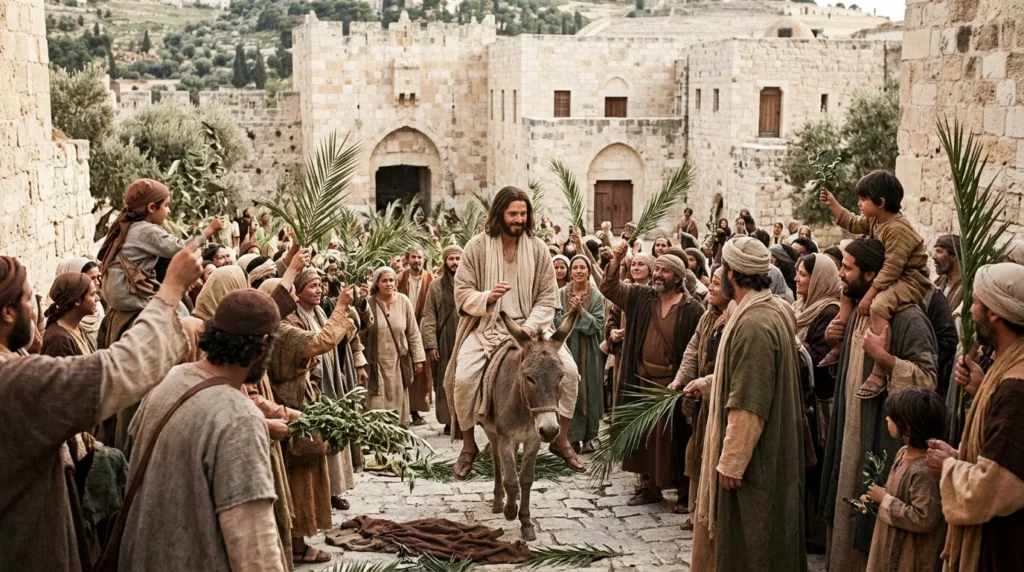
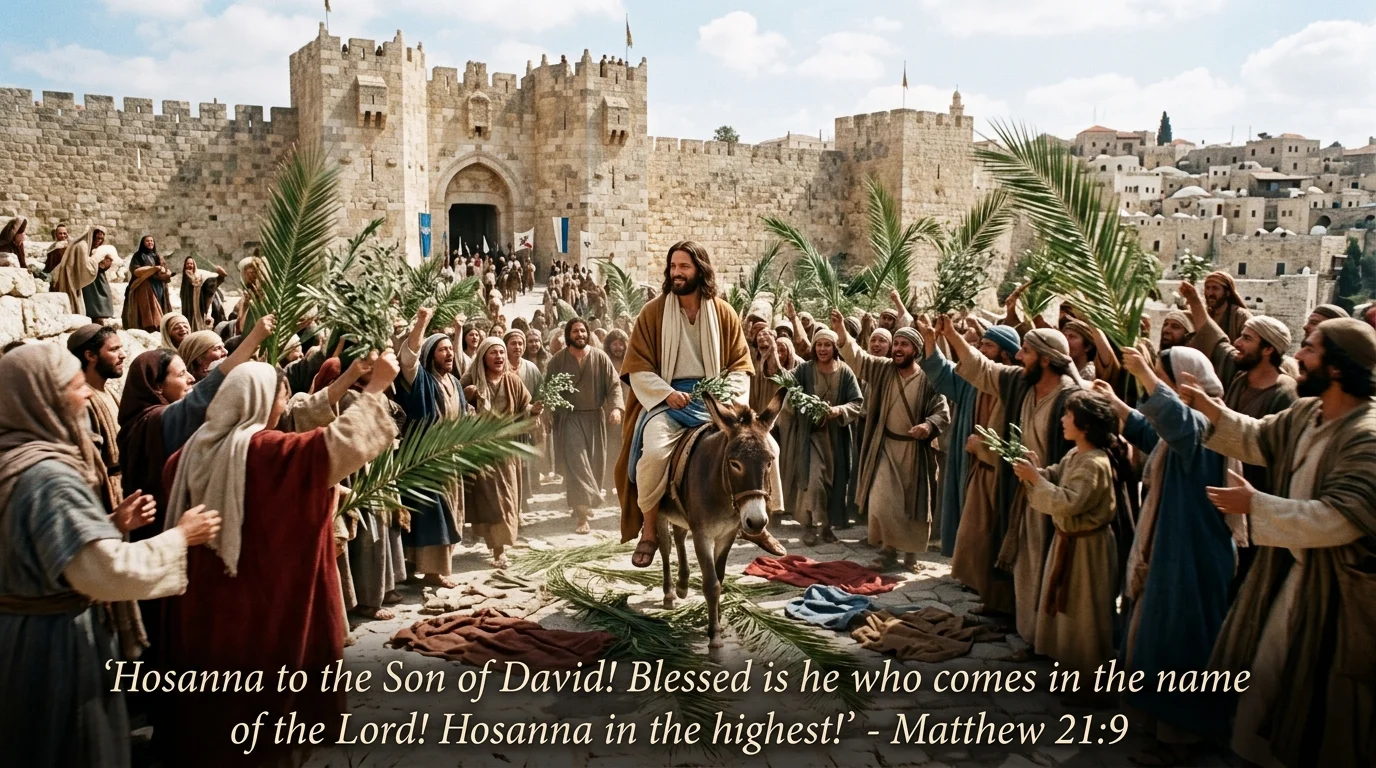
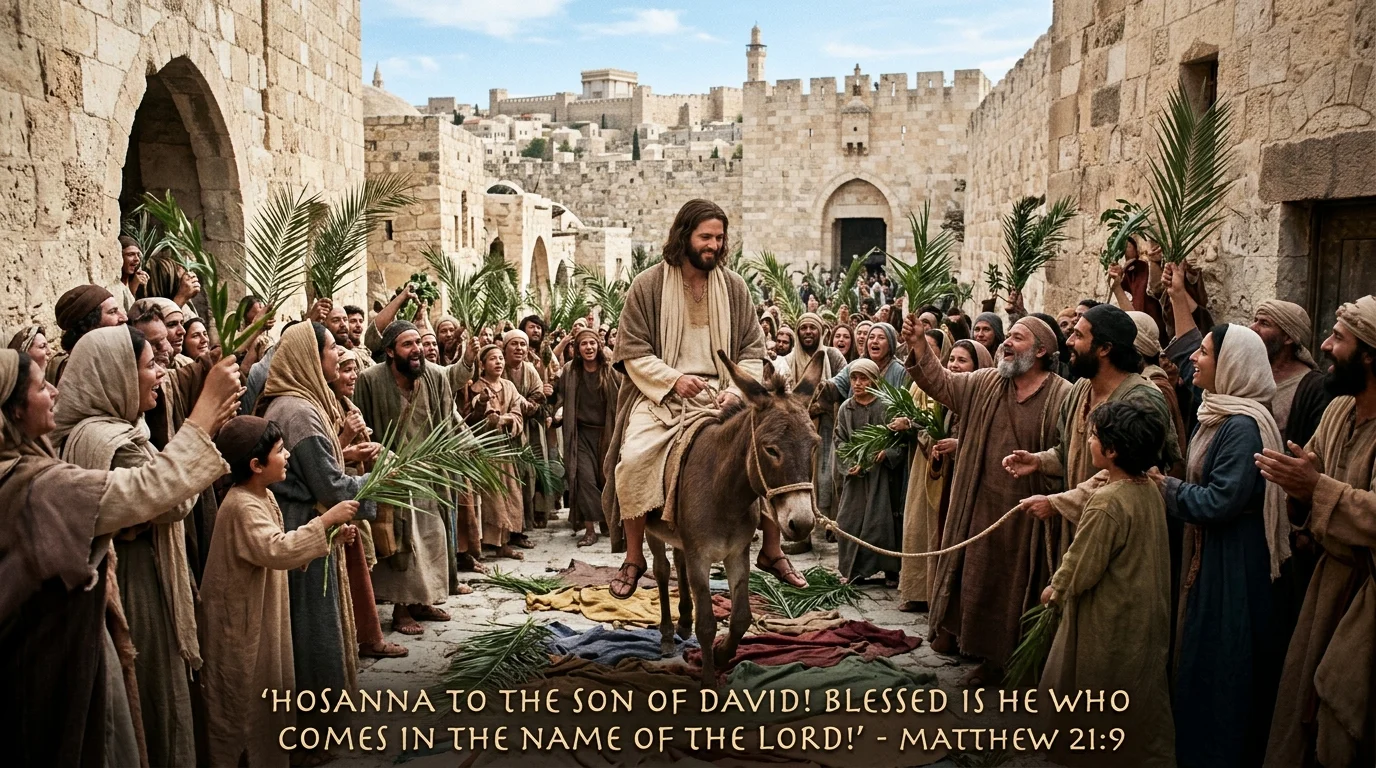
The Triumphal Entry took place just days before Jesus’ crucifixion and resurrection. As Jesus approached Jerusalem, He instructed two disciples to bring Him a young donkey. He then rode into the city while crowds praised God and proclaimed Him as the promised King.
The event fulfilled the prophecy recorded centuries earlier in Zechariah 9:9 (NIV):
“Rejoice greatly, Daughter Zion! Shout, Daughter Jerusalem! See, your king comes to you, righteous and victorious, lowly and riding on a donkey, on a colt, the foal of a donkey.”
One of the clearest Gospel accounts appears in Matthew 21:8–9 (NIV):
“A very large crowd spread their cloaks on the road, while others cut branches from the trees and spread them on the road. The crowds that went ahead of him and those that followed shouted, ‘Hosanna to the Son of David!’ ‘Blessed is he who comes in the name of the Lord!’ ‘Hosanna in the highest heaven!'”
Jesus’ entry into Jerusalem fulfilled prophecy while revealing His identity as the humble Messiah who came to bring peace and salvation.
Key References from Core Bible Books
Zechariah: The Prophecy of the Coming King
Zechariah 9:9 foretold that Israel’s King would arrive riding on a donkey rather than a war horse. This prophecy highlights the Messiah’s humility and peaceful mission, making Zechariah essential for understanding the Triumphal Entry.
Psalms: The Crowd’s Praise
The crowd’s cry, “Blessed is he who comes in the name of the Lord,” comes from Psalm 118:26 (NIV):
“Blessed is he who comes in the name of the LORD. From the house of the LORD we bless you.”
Psalm 118 was already associated with hope and God’s deliverance, making it a fitting song of praise for the Messiah.
John: Jesus Reveals His Identity
John 12:14–15 (NIV) says:
“Jesus found a young donkey and sat on it, as it is written: ‘Do not be afraid, Daughter Zion; see, your king is coming, seated on a donkey’s colt.'”
John emphasizes that Jesus intentionally fulfilled the prophecy, confirming His identity as the promised King.
Hebrews: The Humble Savior
The book of Hebrews presents Jesus as the perfect High Priest and King who willingly humbled Himself to accomplish humanity’s salvation. His humble entry into Jerusalem foreshadows His sacrificial death for sinners.
Spiritual Interpretations
Jesus Is the Promised King
Zechariah 9:9 (NIV)
“See, your king comes to you, righteous and victorious, lowly and riding on a donkey…”
Jesus fulfilled a prophecy written centuries before His birth. His arrival confirmed that God faithfully keeps His promises and that Jesus is the long-awaited Messiah.
True Greatness Is Marked by Humility
Philippians 2:5–8 (NIV)
“He humbled himself by becoming obedient to death—even death on a cross!”
Rather than entering Jerusalem with military strength, Jesus chose humility. His example teaches believers that true greatness comes through serving God and others.
Worship Should Come From a Sincere Heart
Luke 19:38 (NIV)
“‘Blessed is the king who comes in the name of the Lord!’ ‘Peace in heaven and glory in the highest!'”
The crowds praised Jesus with joy, but many later turned away. This reminds Christians that genuine worship is more than words—it is a life devoted to following Christ faithfully.
Jesus Brings Peace
John 14:27 (NIV)
“Peace I leave with you; my peace I give you…”
The donkey symbolized peace rather than conquest. Jesus came to reconcile humanity with God, offering lasting peace through His death and resurrection.
Variations & Related Themes
Why Did Jesus Ride a Donkey?
In the ancient Near East, kings often rode donkeys during times of peace, while horses were associated with war. By choosing a donkey, Jesus publicly demonstrated that His kingdom would be established through humility, righteousness, and peace rather than military force.
What Does “Hosanna” Mean?
The word Hosanna means “Save us, please” or “Save now.” It became both a prayer for salvation and a joyful expression of praise recognizing Jesus as the promised Messiah.
Bible Passages About the Triumphal Entry
The Triumphal Entry is recorded in all four Gospels:
- Matthew 21:1–11
- Mark 11:1–11
- Luke 19:28–44
- John 12:12–19
Reading these accounts together provides a fuller picture of this significant event.
Faith-Based Action Steps
Pray With a Humble Heart
Prayer:
“Heavenly Father, thank You for sending Jesus, the humble King who came to bring peace and salvation. Help me welcome Him into every part of my life with faith and obedience. Teach me to follow His example of humility, love, and service. May my worship be sincere, and may my life reflect His grace to those around me. In Jesus’ name, Amen.”
Reflect on Christ’s Kingship
Ask yourself:
- Have I truly welcomed Jesus as the King of my life?
- Do my actions reflect humble obedience to Him?
- How can I honor Christ through worship and service this week?
Take time to read one of the Gospel accounts of the Triumphal Entry and meditate on what it reveals about Jesus.
Worship With God’s People
Participate in your local church, especially during Palm Sunday and Holy Week services. Worshiping with other believers helps deepen your understanding of Christ’s sacrifice and prepares your heart to celebrate His resurrection.