
Biblical Background
Lapis lazuli is a vibrant blue metamorphic stone prized throughout the ancient Near East. It was primarily mined in what is now Afghanistan and traded across Egypt, Mesopotamia, and Israel. Because it was rare and expensive, it became a symbol of royalty, honor, and great value.
In many modern English Bibles, the Hebrew word sappîr is translated as “sapphire.” However, many biblical scholars believe that the ancient sapphire described in several Old Testament passages was likely lapis lazuli, since the transparent blue sapphire commonly known today was not widely identified in the ancient world.
One of the most striking references appears in Exodus 24:10 (NIV):
“Under his feet was something like a pavement made of lapis lazuli, as bright blue as the sky.”
This vision occurred when Moses, Aaron, Nadab, Abihu, and seventy elders of Israel witnessed a manifestation of God’s glory on Mount Sinai. The brilliant blue pavement emphasized God’s holiness and heavenly majesty.
Another significant reference appears in Ezekiel 1:26 (NIV):
“Above the vault over their heads was what looked like a throne of lapis lazuli…”
Here, the prophet Ezekiel describes an awe-inspiring vision of God’s heavenly throne, using lapis lazuli to communicate divine splendor beyond ordinary human words.
Throughout Scripture, lapis lazuli consistently points toward God’s glory rather than any supernatural property of the stone itself.
Key References from Core Bible Books
Exodus: A Picture of God’s Holiness
Exodus is central to understanding lapis lazuli because it records Israel’s covenant with God at Mount Sinai. Exodus 24:10 (NIV) says,
“Under his feet was something like a pavement made of lapis lazuli, as bright blue as the sky.”
This passage highlights God’s holiness, purity, and unmatched majesty. The stone serves as a visual reminder of the glory of His heavenly presence.
Ezekiel: Visions of God’s Throne
The book of Ezekiel contains vivid prophetic visions that reveal God’s sovereignty. Ezekiel 1:26 (NIV) describes God’s throne as appearing like lapis lazuli.
Ezekiel is especially relevant because its symbolic imagery points readers toward the greatness and authority of the Lord, reminding believers that God reigns over all creation.
Revelation: The Beauty of God’s Eternal Kingdom
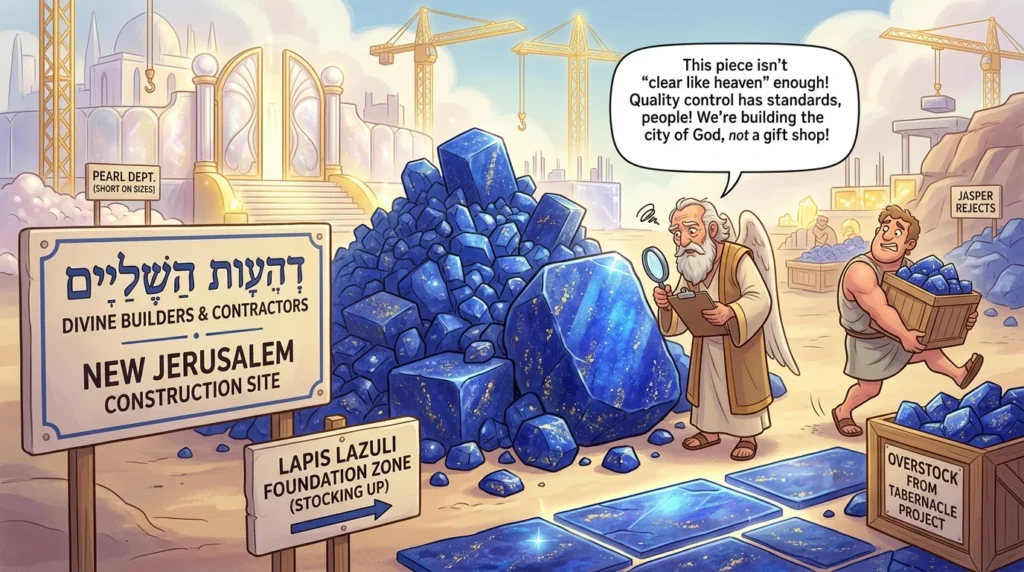
Although Revelation does not specifically mention lapis lazuli by name, it describes precious stones adorning the New Jerusalem. Revelation 21:19–20 (NIV) lists gemstones decorating the city’s foundations, emphasizing the beauty, permanence, and glory of God’s eternal kingdom.
Revelation reminds believers that earthly treasures ultimately point toward the greater reality of God’s everlasting presence.
Proverbs: Wisdom Above Earthly Treasure
Proverbs teaches that wisdom is more valuable than precious stones. Proverbs 3:15 (NIV) says,
“She is more precious than rubies; nothing you desire can compare with her.”
This passage reminds Christians that while gemstones like lapis lazuli are beautiful, the greatest treasure is knowing and walking with God.
Spiritual Interpretations
God’s Glory Is Beyond Human Description
Ezekiel 1:26 (NIV)
“Above the vault over their heads was what looked like a throne of lapis lazuli…”
Ezekiel used the beauty of lapis lazuli to describe God’s heavenly throne because ordinary language could not fully capture His majesty. This reminds believers to approach God with reverence and awe, recognizing that His glory surpasses human understanding.
Holiness Invites Reverence
Exodus 24:10 (NIV)
“Under his feet was something like a pavement made of lapis lazuli, as bright blue as the sky.”
The brilliant blue pavement beneath God’s feet reflected His purity and holiness. Rather than drawing attention to the stone itself, the passage calls believers to honor the One who created all beauty and perfection.
True Treasure Is Found in God
Matthew 6:21 (NIV)
“For where your treasure is, there your heart will be also.”
Lapis lazuli was one of the most valuable stones of the ancient world, yet Jesus reminds His followers that earthly treasures should never become the focus of life. Our greatest treasure is a relationship with Christ and the eternal inheritance He promises.
God’s Promises Are Beautiful and Lasting
Revelation 21:2 (NIV)
“I saw the Holy City, the new Jerusalem, coming down out of heaven from God…”
The precious stones described in Revelation symbolize the perfection and permanence of God’s coming kingdom. They encourage believers to place their hope not in temporary riches but in God’s eternal promises.
Variations & Related Themes
Is Lapis Lazuli the Same as Biblical Sapphire?
Many scholars believe the biblical “sapphire” mentioned in passages such as Exodus 24:10 and Ezekiel 1:26 refers to lapis lazuli rather than the modern gemstone known as sapphire. While scholars continue to discuss the exact identification, both interpretations emphasize God’s glory rather than the stone itself.
Does Lapis Lazuli Have Spiritual Powers?
The Bible never teaches that lapis lazuli or any other gemstone possesses supernatural or healing powers. Instead, Scripture uses precious stones symbolically to reveal God’s beauty, holiness, and majesty. Christians are encouraged to place their trust in God alone rather than in objects.
Why Did God Use Precious Stones in Scripture?
Throughout the Bible, precious stones symbolize beauty, value, purity, and God’s glorious presence. They also remind believers that the Creator is far greater than anything He has made.
Faith-Based Action Steps
Pray for a Heart That Treasures God
Prayer:
“Heavenly Father, thank You for revealing Your glory through the beauty of creation and through Your Word. Help me treasure You above every earthly possession. Teach me to worship You with reverence and to place my hope in Your eternal kingdom. Draw me closer to Jesus each day and shape my heart according to Your will. In His name, Amen.”
Reflect on What You Treasure Most
Ask yourself:
- Do I value my relationship with God above material possessions?
- Am I pursuing wisdom more than worldly success?
- How can I better reflect God’s holiness in my daily life?
Spend time journaling your answers and praying for a heart that seeks God’s kingdom first.
Grow in Biblical Understanding
Study the passages in Exodus 24, Ezekiel 1, and Revelation 21 with your church, a Bible study group, or a trusted pastor. Learning Scripture in community helps deepen understanding and keeps our focus on God’s truth rather than speculation.