
Have you ever wondered why some longest and shortest book in the Bible are only a single page while others span dozens of chapters? Maybe you were reading through Scripture and noticed how quickly you finished one book, only to spend weeks journeying through another. It is a fascinating observation, and many Christians naturally ask why God included books of such different lengths in His Word.
The length of a biblical book does not determine its importance. Every book of the Bible, whether long or short, reveals God’s character, His plan of salvation, and His desire to draw people into a relationship with Him. A single chapter can transform a heart just as powerfully as a book with hundreds of verses.
Biblical Background
The Bible is a collection of 66 books written over approximately 1,500 years by around 40 human authors under the inspiration of the Holy Spirit. As 2 Timothy 3:16 (NIV) declares, “All Scripture is God-breathed and is useful for teaching, rebuking, correcting and training in righteousness.” This means every biblical book, regardless of its size, carries divine authority.
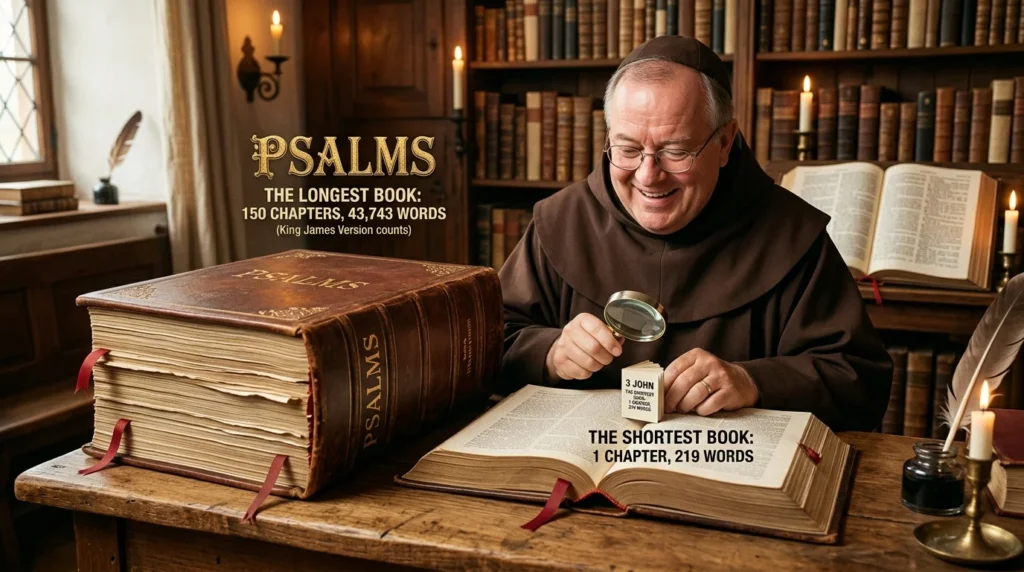
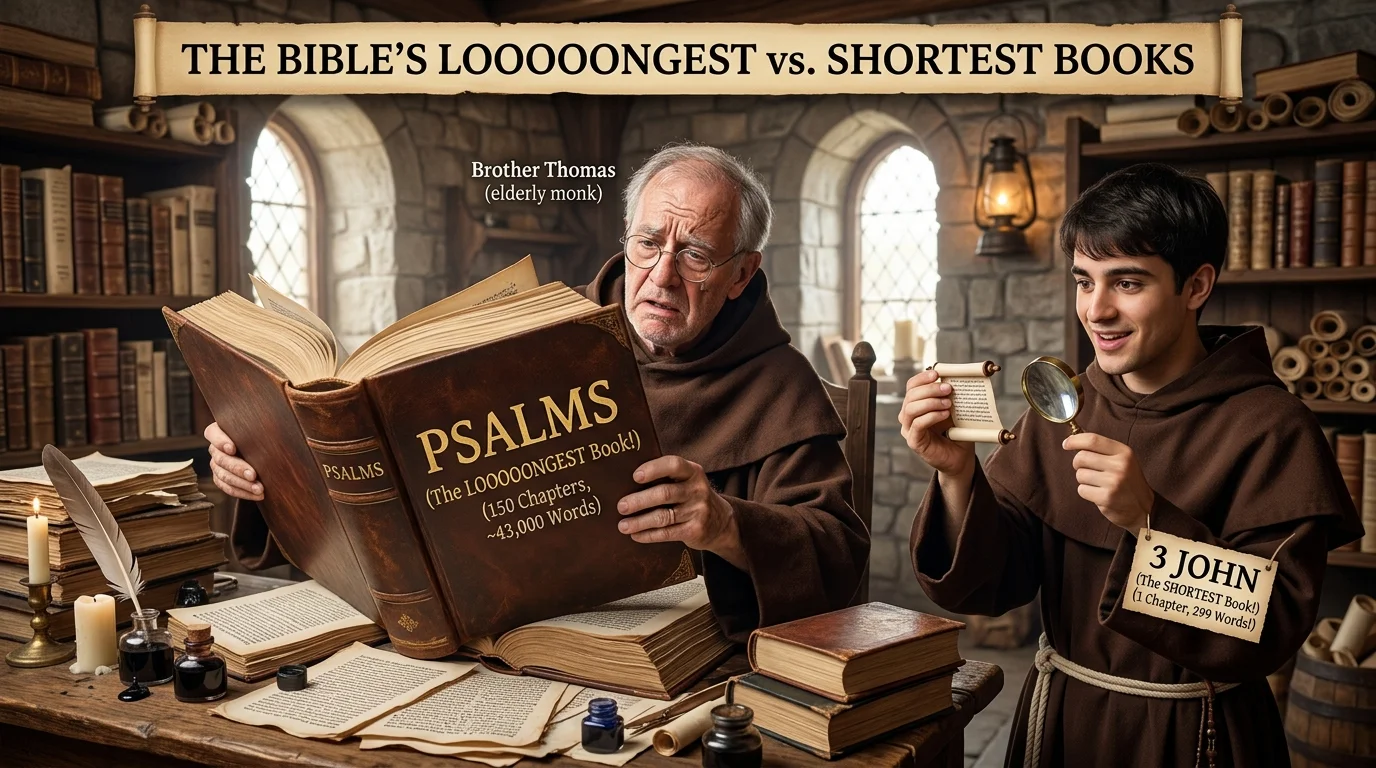
The longest book in the Bible is Psalms, containing 150 chapters and 2,461 verses. It is a collection of songs, prayers, and poems that express every human emotion before God. Many of these psalms were written by King David, while others were composed by Asaph, the sons of Korah, Moses, Solomon, and anonymous writers.
The shortest book in the Bible is commonly recognized as 3 John, consisting of only one chapter and 219 words in the original Greek. Some English translations may make 2 John appear slightly shorter due to translation differences, but in the original language, 3 John is generally accepted as the shortest book.
These differences in length remind us that God’s message is not measured by word count. Whether through a brief personal letter or a lengthy collection of worship songs, the Holy Spirit speaks with purpose and power.
Key References from Core Longest and Shortest Book in the Bible
Psalms: Worship Through Every Season
Since Psalms is the longest book in Scripture, it naturally teaches us that God welcomes every emotion into His presence. Psalm 119:105 (NIV) says, “Your word is a lamp for my feet, a light on my path.” This verse reminds believers that God’s Word continually guides daily life.
Proverbs: Wisdom Is More Valuable Than Length
The book of Proverbs emphasizes practical wisdom rather than lengthy discussion. Proverbs 3:5–6 (NIV) encourages believers:
“Trust in the LORD with all your heart and lean not on your own understanding; in all your ways submit to him, and he will make your paths straight.”
Proverbs shows that even concise sayings can contain lifelong wisdom.
John: The Purpose of Scripture
The Gospel of John explains why the Bible exists. John 20:31 (NIV) says,
“But these are written that you may believe that Jesus is the Messiah, the Son of God, and that by believing you may have life in his name.”
Whether reading a long book like Psalms or a short one like 3 John, the goal remains the same—to strengthen faith in Christ.
Hebrews: God’s Living Word
Hebrews highlights the enduring power of Scripture. Hebrews 4:12 (NIV) states,
“For the word of God is alive and active. Sharper than any double-edged sword…”
This reminds readers that every inspired book, regardless of length, has the power to transform hearts.

Spiritual Interpretations
Every Part of God’s Word Has Equal Authority
2 Timothy 3:16 (NIV)
“All Scripture is God-breathed and is useful for teaching, rebuking, correcting and training in righteousness.”
The longest and shortest books remind us that God’s authority is not based on how many chapters a book contains. Every verse is inspired by the Holy Spirit. Christians should approach all Scripture with equal reverence, knowing that God speaks through each page.
God Speaks Through Both Long Journeys and Simple Messages
Isaiah 55:11 (NIV)
“So is my word that goes out from my mouth: It will not return to me empty, but will accomplish what I desire…”
Sometimes God teaches through extended stories and detailed instruction. Other times He speaks through brief letters or short commands. His Word always accomplishes His purpose, regardless of its length.
Faith Grows Through Consistent Reading
Joshua 1:8 (NIV)
“Keep this Book of the Law always on your lips; meditate on it day and night…”
Long books encourage perseverance and deep reflection. Short books encourage frequent reading and careful meditation. Together they help believers develop a steady habit of spending time with God.
God’s Message Always Points to Christ
Luke 24:27 (NIV)
“And beginning with Moses and all the Prophets, he explained to them what was said in all the Scriptures concerning himself.”
Every biblical book ultimately points toward God’s plan of redemption fulfilled in Jesus Christ. Whether reading Psalms or 3 John, believers are invited to know Christ more deeply and grow in faith.
Variations & Related Themes
The Longest Chapter in the Bible
While Psalms is the longest book, Psalm 119 is the longest chapter in Scripture. It contains 176 verses and celebrates the beauty, wisdom, and faithfulness of God’s Word.
The Shortest Chapter in the Bible
Psalm 117 is the shortest chapter in the Bible, containing only two verses. Though brief, it calls every nation to praise the Lord, showing that even a few words can proclaim God’s greatness.
The Shortest Verse in the Bible
Many Christians know John 11:35, “Jesus wept.” Although it contains only two words in English, it reveals Christ’s compassion and humanity. It demonstrates that even the shortest verse carries profound theological significance.
Faith-Based Action Steps
Pray for a Deeper Love for Scripture
Prayer:
“Heavenly Father, thank You for giving us Your perfect Word. Help me treasure every book of the Bible, whether long or short. Open my heart to understand Your truth and strengthen my faith through daily reading. Let Your Holy Spirit guide me as I grow closer to Jesus. In His name I pray, Amen.”
Reflect on Your Bible Reading Habits
Ask yourself:
- Do I skip certain books because they seem too long?
- Have I overlooked short books that contain valuable wisdom?
- How can I become more consistent in reading God’s Word each day?
Write your answers in a journal and ask God to help you grow.
Join Others in Studying Scripture
Reading the Bible with fellow believers brings encouragement and accountability. Consider joining a church Bible study, a small group, or meeting regularly with a mature Christian mentor who can help explain difficult passages and encourage spiritual growth.
Conclusion
The longest and shortest books in the Bible beautifully demonstrate God’s wisdom in communicating with His people. Psalms, the longest book, leads readers through praise, repentance, worship, and trust across 150 chapters. 3 John, the shortest book, reminds believers that faithfulness, hospitality, and walking in truth are precious to God, even in a brief letter.
