
Biblical Background:What Is the Best Translation of the Bible
The Bible was originally written in Hebrew, Aramaic, and Greek. Because most readers today do not speak these ancient languages, biblical scholars have carefully translated the Scriptures into modern languages while seeking to preserve their original meaning.
Throughout history, God’s people have valued His Word above all else. 2 Timothy 3:16–17 (NIV) says:
“All Scripture is God-breathed and is useful for teaching, rebuking, correcting and training in righteousness, so that the servant of God may be thoroughly equipped for every good work.”
Likewise, Psalm 119:105 (NIV) declares:
“Your word is a lamp for my feet, a light on my path.”
The purpose of every trustworthy Bible translation is to help readers understand God’s inspired Word accurately. While wording may differ slightly between translations, the essential truths of the Christian faith remain consistent.
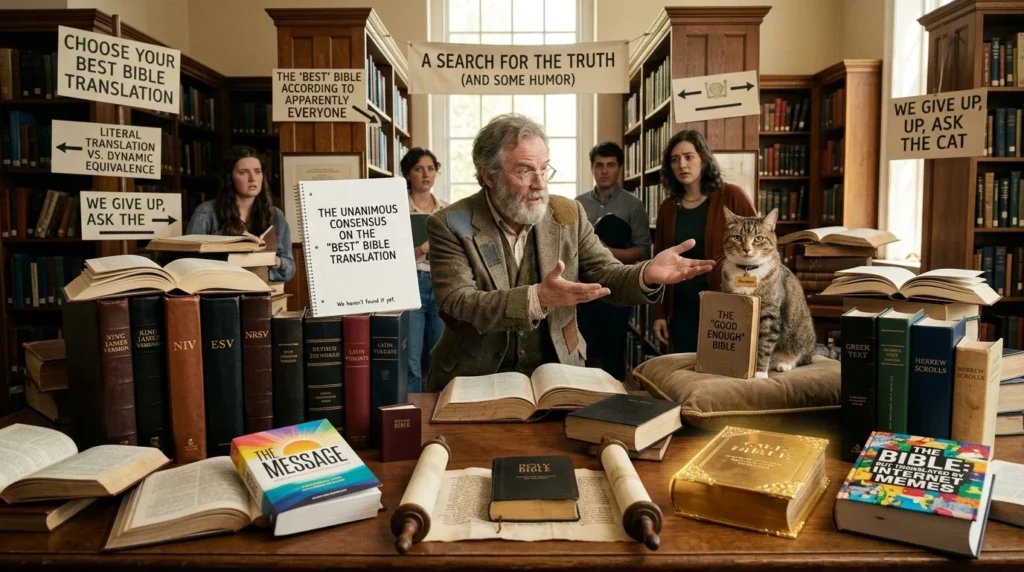
Bible translations generally follow one of three approaches:
- Word-for-word (Formal Equivalence): Focuses on translating the original words as closely as possible.
- Thought-for-thought (Dynamic Equivalence): Prioritizes conveying the original meaning in natural modern language.
- Balanced Approach: Combines accuracy with readability.
Understanding these approaches helps readers choose a translation that fits their needs.
Key References from Core Bible Books
Psalms: Treasure God’s Word
Psalm 119:105 (NIV) says,
“Your word is a lamp for my feet, a light on my path.”
The Psalms emphasize the importance of regularly reading and trusting God’s Word, regardless of the translation used.
Proverbs: Seek Wisdom
Proverbs 2:6 (NIV) says,
“For the LORD gives wisdom; from his mouth come knowledge and understanding.”
Proverbs reminds believers that Scripture leads to wisdom and discernment.
John: Jesus Is the Living Word
John 1:1 (NIV) says,
“In the beginning was the Word, and the Word was with God, and the Word was God.”
John reminds Christians that every faithful Bible translation ultimately points to Jesus Christ.
Hebrews: Scripture Is Living and Active
Hebrews 4:12 (NIV) says,
“For the word of God is alive and active…”
Hebrews encourages believers to approach the Bible expecting God to transform their hearts through His Word.
Spiritual Interpretations
God’s Word Is Trustworthy
Isaiah 40:8 (NIV)
“The grass withers and the flowers fall, but the word of our God endures forever.”
Bible translations may vary in wording, but God’s truth never changes. His promises remain faithful throughout every generation.
Scripture Helps Us Grow Spiritually
2 Timothy 3:16–17 (NIV)
“All Scripture is God-breathed…”
Every faithful translation equips believers to know God, grow in wisdom, and live according to His will.
Read God’s Word Daily
Joshua 1:8 (NIV)
“Keep this Book of the Law always on your lips; meditate on it day and night…”
The greatest benefit comes not from owning many Bibles but from consistently reading and applying God’s Word.
Jesus Is the Center of Scripture
Luke 24:27 (NIV)
“And beginning with Moses and all the Prophets, he explained to them what was said in all the Scriptures concerning himself.”
Every trustworthy translation points readers to Jesus Christ and His saving work.
Variations & Related Themes
Best Bible Translation for Study
Many pastors and Bible teachers recommend the English Standard Version (ESV), New American Standard Bible (NASB), or New King James Version (NKJV) because they closely follow the original languages and are well suited for detailed study.
Best Bible Translation for Beginners
For new Christians or younger readers, the New Living Translation (NLT) and the Christian Standard Bible (CSB) are excellent choices because they use clear, modern English while remaining faithful to Scripture.
Best Bible Translation for Everyday Reading
The New International Version (NIV) is one of the most widely used translations because it balances readability with accuracy. Many Christians find it ideal for daily devotions, church services, and personal Bible study.
Faith-Based Action Steps
Pray Before Reading the Bible
Prayer:
“Heavenly Father, thank You for giving us Your Word. As I read the Bible, help me understand Your truth through the guidance of the Holy Spirit. Open my heart to know Jesus more deeply, strengthen my faith, and help me apply Your Word in my daily life. Give me wisdom as I continue to grow in my relationship with You. In Jesus’ name, Amen.”
Choose a Translation You’ll Read Consistently
Ask yourself:
- Am I looking for deep Bible study or easier reading?
- Which translation helps me understand God’s Word best?
- Am I spending regular time reading Scripture?
Reading one faithful translation consistently is more valuable than owning several that remain unopened.
Study Scripture With Other Believers
Join a Bible study group or local church where you can ask questions, discuss passages, and grow alongside mature Christians. Hearing different perspectives often deepens your understanding of God’s Word.