
Biblical Background:What Order Should You Read the Bible
The Bible encourages believers to read, study, and meditate on God’s Word regularly.
2 Timothy 3:16–17 (NIV) says:
All Scripture is God-breathed and is useful for teaching, rebuking, correcting and training in righteousness, so that the servant of God may be thoroughly equipped for every good work.
Similarly, Psalm 119:105 (NIV) declares:
“Your word is a lamp for my feet, a light on my path.”
These verses remind us that every part of Scripture is valuable for spiritual growth.
Is There a Correct Order to Read the Bible?
There is no single biblical command that says you must read the Bible in a specific order.
Instead, choose a reading plan that helps you:
- Understand God’s message.
- Grow in your relationship with Christ.
- Build a consistent habit of Bible reading.
- Apply Scripture to your daily life.
The important thing is not where you start, but that you keep reading faithfully.
Best Order for Beginners
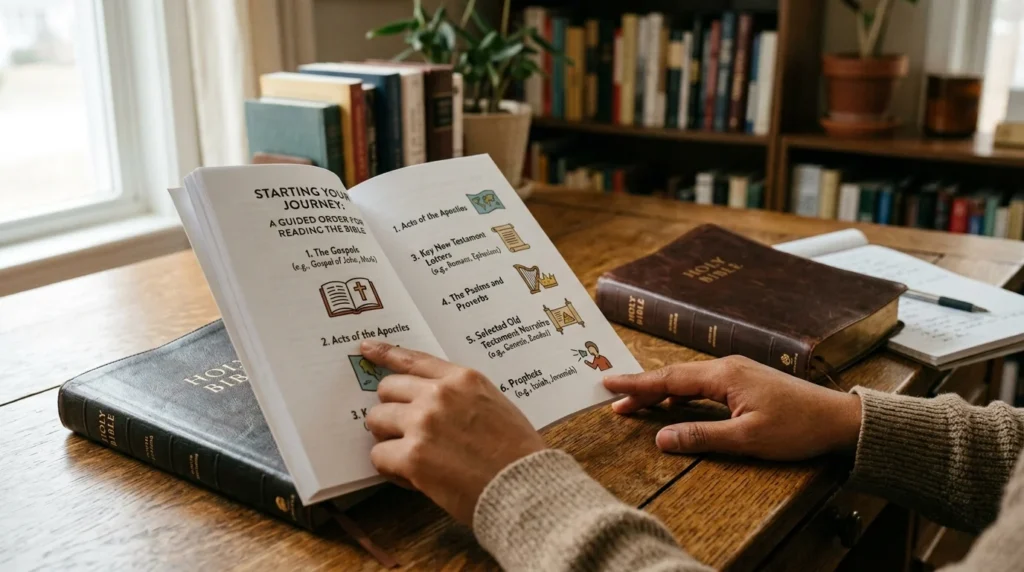
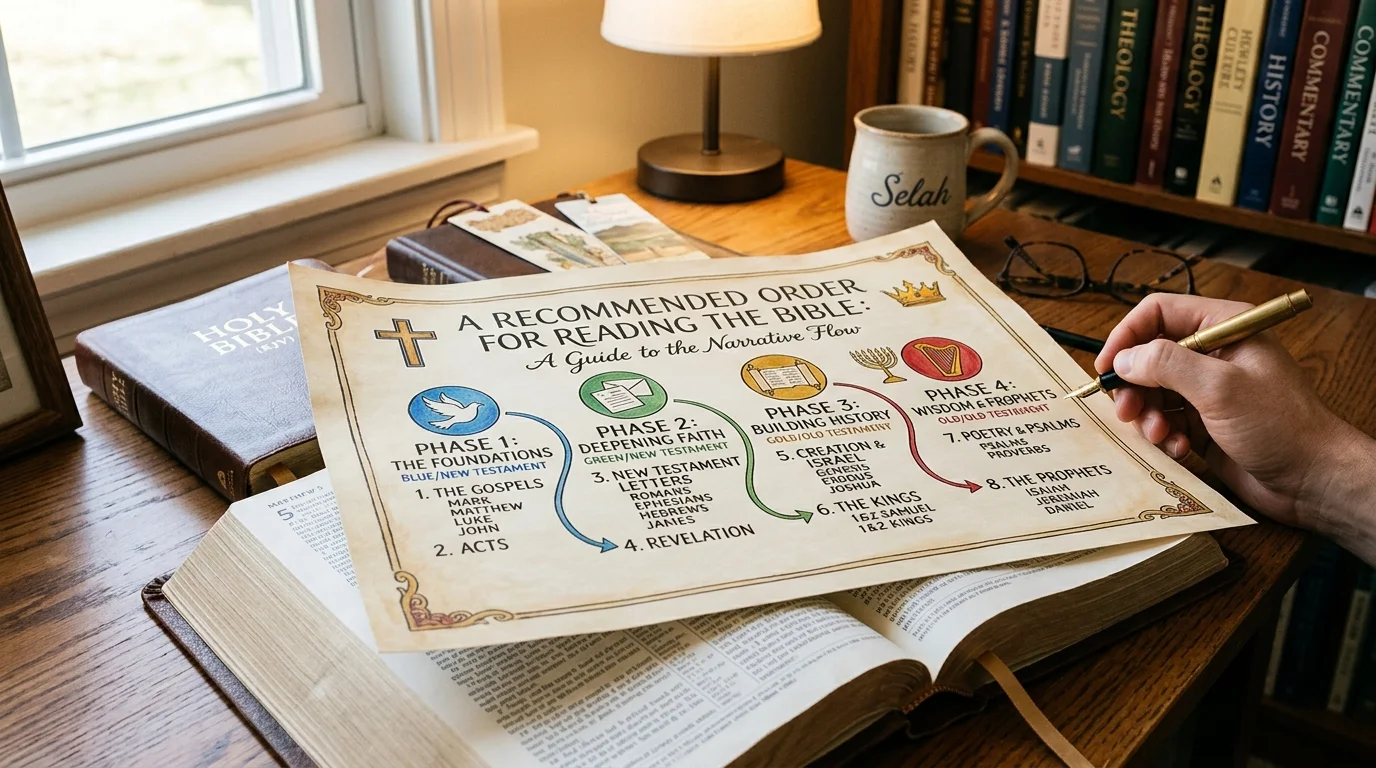
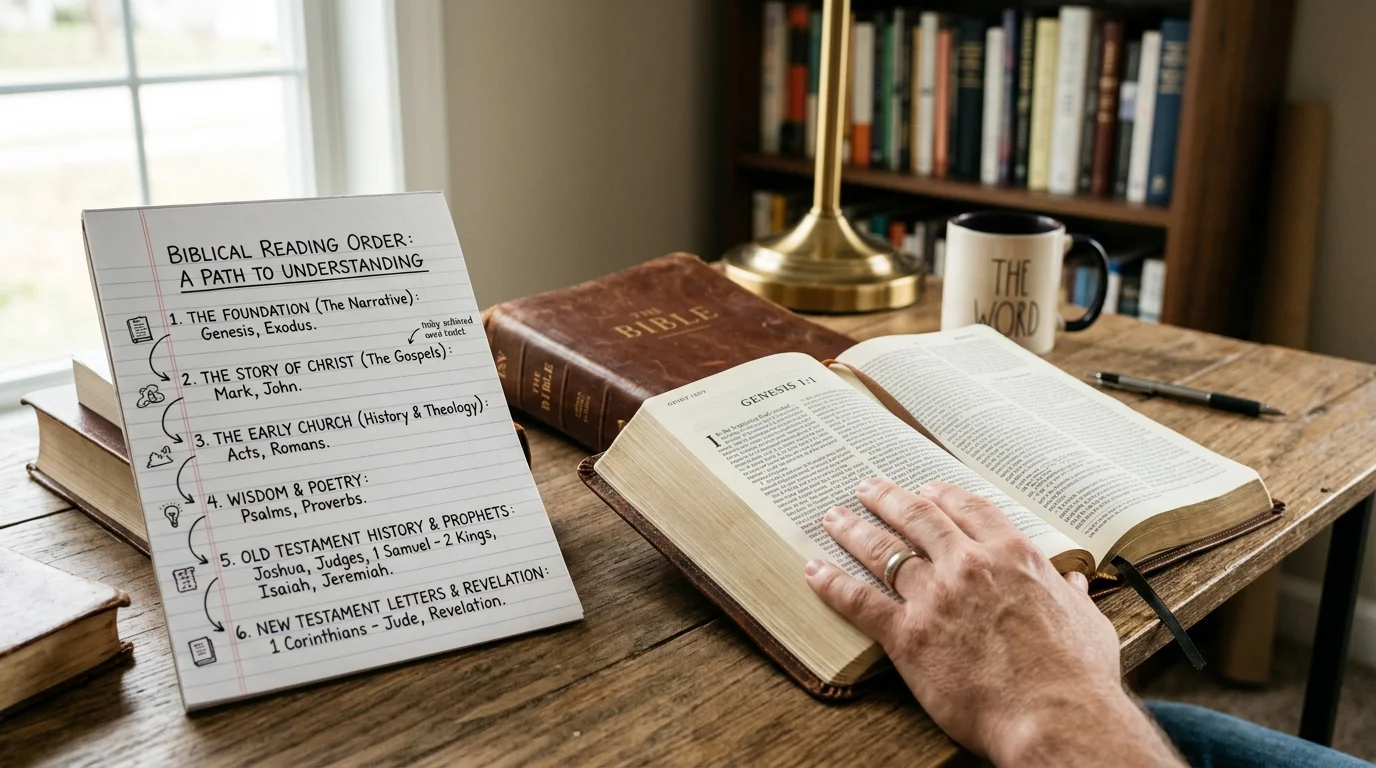
If you’re reading the Bible for the first time, this order is often recommended.
1. Gospel of John
John clearly explains who Jesus is and why He came.
2. Gospel of Mark
Mark provides a fast-paced overview of Jesus’ ministry and miracles.
3. Gospel of Luke
Luke offers a detailed account of Jesus’ life and teachings.
4. Acts
Learn how the early church spread the gospel after Jesus’ resurrection.
5. Romans
Discover the foundations of Christian faith and salvation.
6. Psalms
Read prayers, worship, and encouragement for everyday life.
7. Proverbs
Gain practical wisdom for daily living.
After completing these books, continue through the remaining New Testament before reading the Old Testament.
Reading the Bible from Genesis to Revelation
Many believers enjoy reading the Bible in its traditional order.
Benefits
- Covers every book of the Bible.
- Provides a complete overview of Scripture.
- Helps readers become familiar with the entire biblical story.
Challenge
Some sections, such as Leviticus or Numbers, can be difficult for beginners.
Reading the Bible Chronologically
A chronological reading plan arranges events in the order they happened rather than the order of the books.
Benefits
- Makes biblical history easier to follow.
- Helps connect prophets with historical events.
- Provides a clearer understanding of God’s unfolding plan.
This approach is popular among readers who already have some familiarity with Scripture.
Reading by Topic
Another option is to study the Bible according to themes.
Examples include:
- Faith
- Prayer
- Love
- Forgiveness
- Hope
- Wisdom
- Salvation
- Peace
This method is helpful when seeking biblical guidance for specific life situations.
Sample 30-Day Reading Plan
If you’re unsure where to begin, consider this simple plan.
Week 1
Read the Gospel of John.
Week 2
Read Mark and selected Psalms.
Week 3
Read Luke and Proverbs.
Week 4
Begin Acts and Romans.
This plan introduces the life of Jesus while also providing practical wisdom and encouragement.
Tips for Reading the Bible
Pray Before Reading
Ask God to help you understand His Word.
Read a Little Each Day
Consistency is more important than reading large amounts at once.
Take Notes
Write down questions, observations, and verses that stand out.
Read in Context
Study entire chapters instead of isolated verses whenever possible.
Apply What You Learn
Look for practical ways to obey God’s Word in everyday life.
Frequently Asked Questions
What book should I read first in the Bible?
Many people recommend starting with the Gospel of John because it clearly introduces Jesus and His message.
Should I read the Bible from beginning to end?
Yes, but beginners often find it easier to begin with the New Testament before reading the Old Testament.
Is it better to read chronologically?
Chronological reading helps many people understand the historical timeline, but it is not required.
How much of the Bible should I read each day?
Even reading one chapter a day can help you develop a consistent habit and grow spiritually.
Can I skip difficult books?
While every book of the Bible is valuable, it’s okay to return to more challenging books after building a stronger foundation.
What is the most important thing when reading the Bible?
Read prayerfully, seek to understand God’s message, and apply His truth to your life.
Faith-Based Action Steps
Prayer
Heavenly Father, thank You for giving us Your Word. Help me read the Bible with understanding, humility, and faith. Teach me through the Scriptures, strengthen my relationship with You, and guide me to live according to Your truth each day. In Jesus’ name, Amen.”
Choose a Reading Plan
Select a reading order that fits your experience level and commit to it.
Read Daily
Set aside a regular time each day to spend with God in His Word.
Share What You Learn
Discuss Scripture with family, friends, or your church community to grow together in faith.