


Biblical Background:I Thirst Bible Verse
The phrase “I thirst” appears during the account of Jesus’ crucifixion in the Gospel of John.
John 19:28 (NIV) says:
“Later, knowing that everything had now been finished, and so that Scripture would be fulfilled, Jesus said, ‘I am thirsty.'”
Many English translations, including the King James Version (KJV) and the English Standard Version (ESV), translate Jesus’ words as “I thirst.”
John explains that Jesus spoke these words to fulfill Scripture. This connects directly with Psalm 69:21 (NIV):
“They put gall in my food and gave me vinegar for my thirst.”
After Jesus spoke, the soldiers offered Him wine vinegar on a sponge.
John 19:29 (NIV) says:
“A jar of wine vinegar was there, so they soaked a sponge in it, put the sponge on a stalk of the hyssop plant, and lifted it to Jesus’ lips.”
These events demonstrate that even in His final moments, Jesus fulfilled Old Testament prophecy exactly as God had foretold.
Key References from Core Bible Books
Psalms: The Prophecy of the Messiah’s Suffering
The book of Psalms contains several prophetic passages that point to Jesus’ crucifixion.
Psalm 69:21 (NIV) says:
“They put gall in my food and gave me vinegar for my thirst.”
This prophecy finds its fulfillment in John 19, revealing God’s sovereign plan centuries before Christ’s death.
Isaiah: The Suffering Servant
Isaiah 53:5 (NIV) says:
“But he was pierced for our transgressions, he was crushed for our iniquities…”
Isaiah explains why Jesus willingly endured suffering. His thirst was part of the sacrifice He made for humanity’s salvation.
John: The Fulfillment of God’s Plan
John 19:28–30 (NIV) records Jesus’ final moments on the cross.
John highlights that Christ knowingly fulfilled Scripture, demonstrating His complete obedience to the Father’s will.
Hebrews: Jesus Understands Human Weakness
Hebrews 4:15 (NIV) says:
“For we do not have a high priest who is unable to empathize with our weaknesses…”
Hebrews reminds believers that Jesus experienced genuine human suffering, allowing Him to sympathize with our struggles.
Spiritual Interpretations
Jesus Experienced Real Human Suffering
Hebrews 4:15 (NIV)
“For we do not have a high priest who is unable to empathize with our weaknesses…”
When Jesus said, “I thirst,” He revealed His true humanity. He experienced pain, exhaustion, and physical suffering just as any human would. This reminds believers that Christ understands their struggles and compassionately walks with them through every trial.
Jesus Fulfilled God’s Promises
John 19:28 (NIV)
“…so that Scripture would be fulfilled, Jesus said, ‘I am thirsty.'”
Jesus’ words demonstrate that God’s plan of salvation unfolded exactly as foretold in Scripture. Every prophecy fulfilled on the cross strengthens our confidence in God’s faithfulness.
Christ Bore Our Suffering
Isaiah 53:4 (NIV)
“Surely he took up our pain and bore our suffering…”
Jesus willingly endured thirst, pain, and humiliation so that sinners could receive forgiveness and eternal life. His suffering reveals the depth of God’s love for humanity.
Jesus Offers Living Water
John 4:13–14 (NIV)
“Whoever drinks the water I give them will never thirst.”
The One who experienced physical thirst on the cross now offers eternal spiritual satisfaction. Through faith in Christ, believers receive the living water that brings everlasting life.
Variations & Related Themes
“I Thirst” in Different Bible Translations
Some Bible translations render Jesus’ words differently:
- KJV: “I thirst.”
- ESV: “I thirst.”
- NIV: “I am thirsty.”
- NKJV: “I thirst!”
Although the wording varies slightly, the meaning remains the same and points to Jesus’ physical suffering and the fulfillment of prophecy.
The Seven Sayings of Jesus on the Cross
“I thirst” is traditionally recognized as one of the Seven Last Sayings of Christ, alongside statements such as:
- “Father, forgive them…” (Luke 23:34)
- “Today you will be with me in paradise.” (Luke 23:43)
- “It is finished.” (John 19:30)
Together, these sayings reveal Jesus’ compassion, obedience, and saving mission.
Physical Thirst and Spiritual Thirst
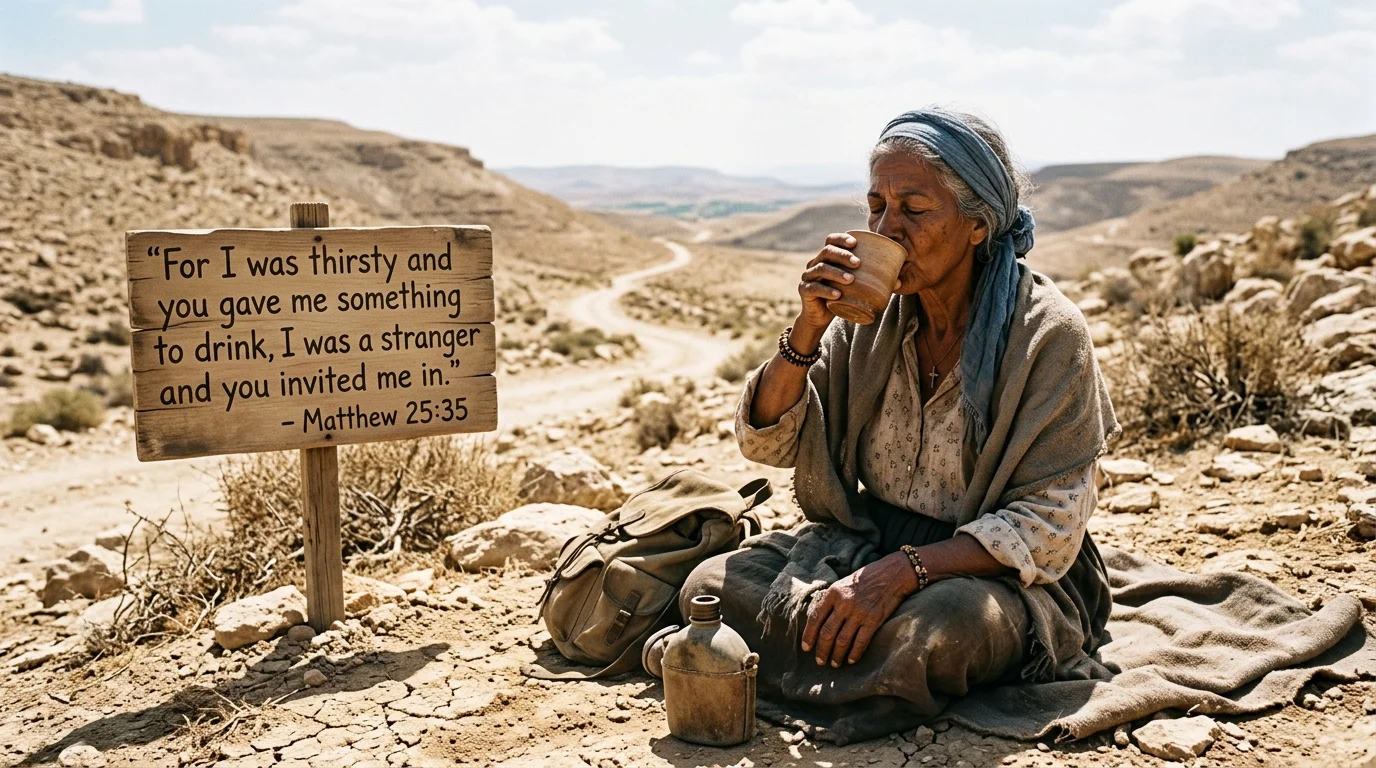
Scripture often uses thirst as a symbol of longing for God.
Psalm 42:1–2 compares the soul’s desire for God to a deer longing for water, while John 7:37–38 invites all who are spiritually thirsty to come to Christ.
Faith-Based Action Steps
Thank Jesus for His Sacrifice
Prayer:
“Heavenly Father, thank You for sending Jesus to suffer and die for my sins. Thank You that He willingly endured pain, thirst, and the cross so that I could receive forgiveness and eternal life. Help me never take His sacrifice for granted. Fill my heart with gratitude, strengthen my faith, and satisfy my deepest spiritual needs through Jesus Christ, the Living Water. Amen.”
Reflect on Christ’s Love
Take time to consider these questions:
- What does Jesus’ willingness to suffer teach me about God’s love?
- How can I respond with greater gratitude and obedience?
- In what areas of my life do I need to depend more fully on Christ?
Writing your reflections can deepen your appreciation for the cross.
Grow in Faith With Other Believers
Study the Gospel accounts of the crucifixion with your church, Bible study group, or a trusted pastor. Learning alongside other Christians can provide deeper insig