
Biblical Background:Palm Sunday Bible Verses Luke
Palm Sunday fulfilled several Old Testament prophecies concerning the coming Messiah. One of the most important is found in Zechariah 9:9 (NIV):
“Rejoice greatly, Daughter Zion! Shout, Daughter Jerusalem! See, your king comes to you, righteous and victorious, lowly and riding on a donkey, on a colt, the foal of a donkey.”
Jesus intentionally entered Jerusalem in this way to reveal that He was the promised King. However, unlike earthly rulers who often arrived on war horses, Jesus rode on a humble colt, symbolising peace.
Luke’s account is found in Luke 19:28–44, where the joyful procession is followed by Jesus weeping over Jerusalem because many people rejected God’s offer of salvation.
Key References from Core Bible Books
Luke 19:28–35 – Jesus Sends for the Colt
Jesus instructed two disciples to bring a colt that had never been ridden.
Luke 19:30–31 (NIV) says:
“Go to the village ahead of you, and as you enter it, you will find a colt tied there… If anyone asks you, ‘Why are you untying it?’ say, ‘The Lord needs it.'”
This demonstrates Jesus’ authority and His fulfilment of prophecy.
Luke 19:36–38 – The Crowd Praises Jesus
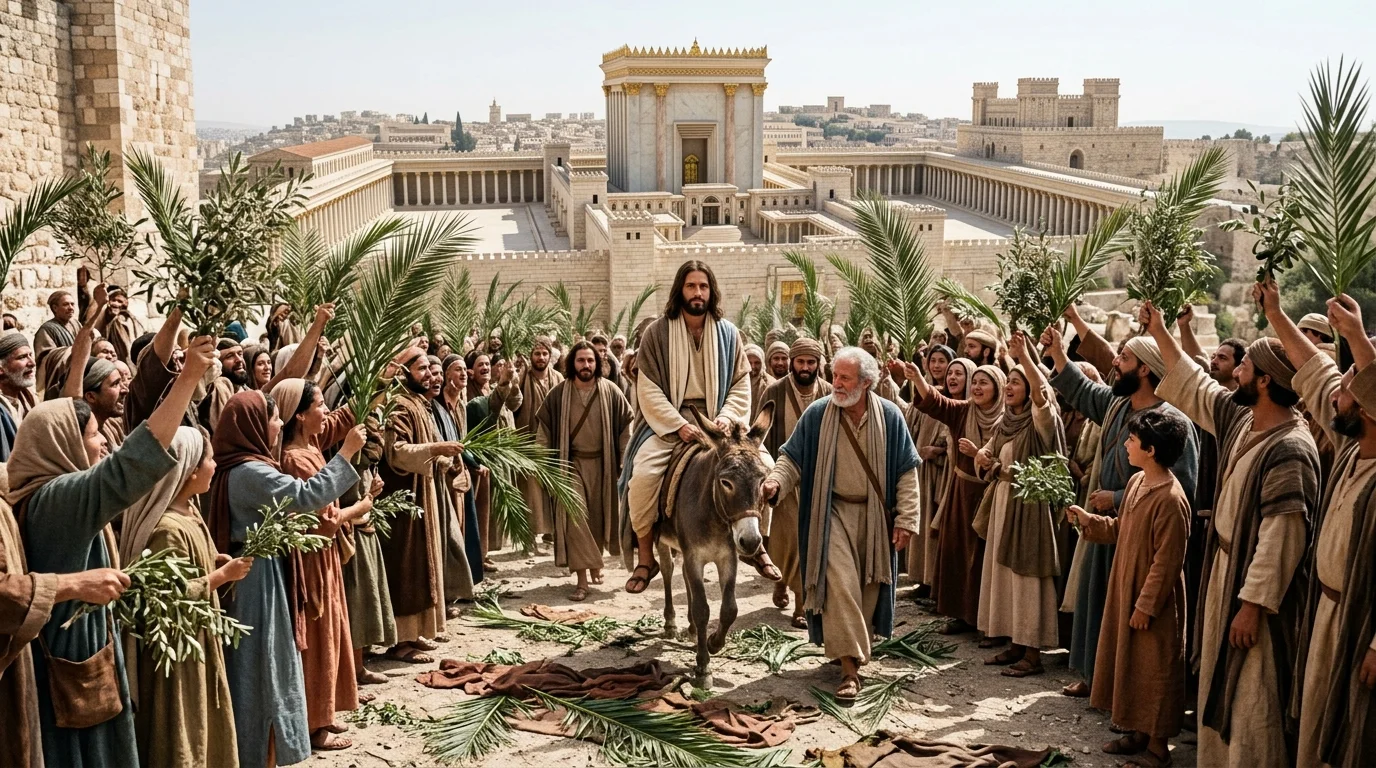
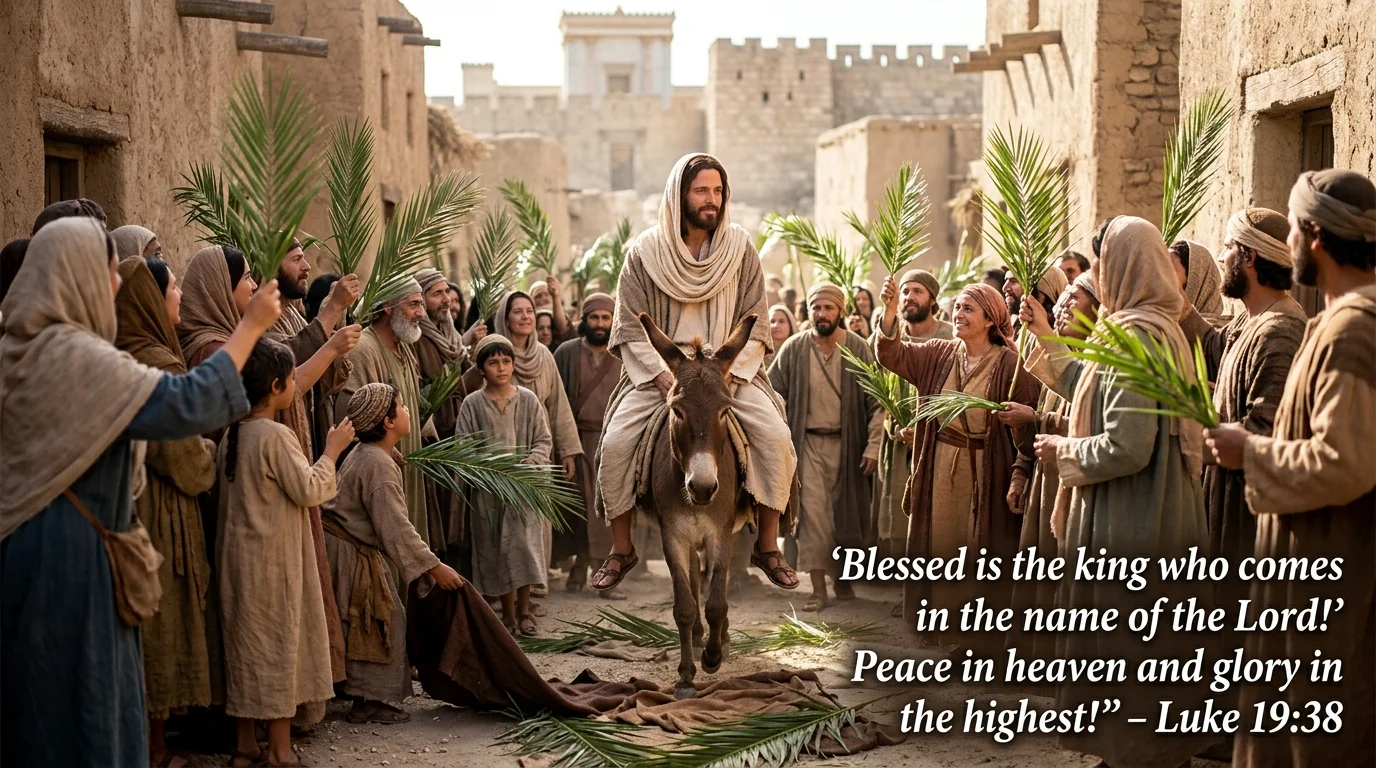
As Jesus entered Jerusalem, people spread their cloaks on the road and praised God.
Luke 19:38 (NIV) says:
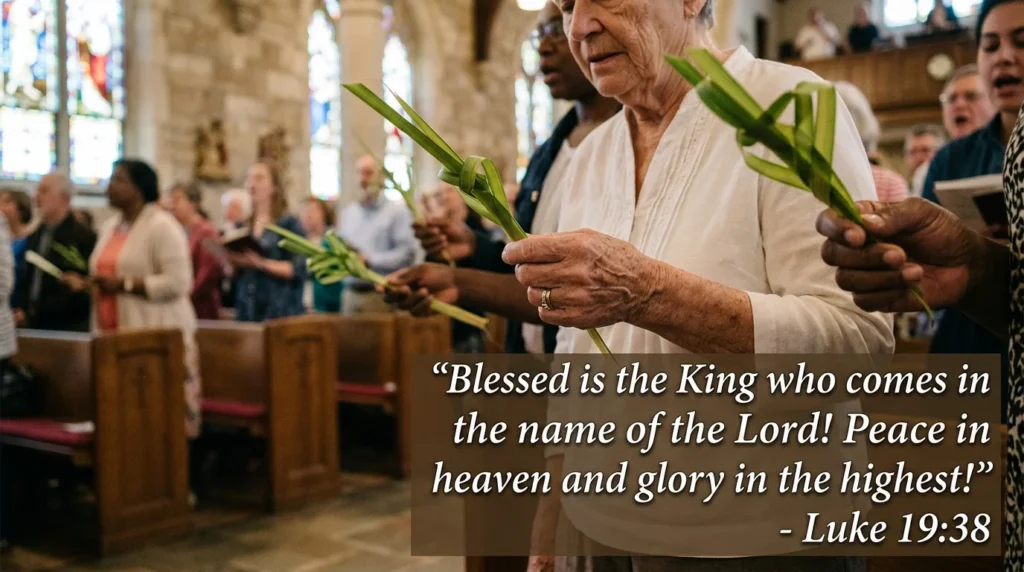
“Blessed is the king who comes in the name of the Lord! Peace in heaven and glory in the highest!”
The crowd recognised Jesus as the promised King, though many did not yet fully understand His mission.
Luke 19:39–40 – Even the Stones Would Cry Out
Some Pharisees asked Jesus to silence His disciples.
Jesus replied:
Luke 19:40 (NIV)
“I tell you… if they keep quiet, the stones will cry out.”
This powerful statement emphasises that creation itself bears witness to Christ’s glory.
Luke 19:41–44 – Jesus Weeps Over Jerusalem
One of Luke’s unique contributions is recording Jesus’ deep sorrow for Jerusalem.
Luke 19:41 (NIV) says:
“As he approached Jerusalem and saw the city, he wept over it.”
Jesus grieved because many people rejected the peace and salvation He offered.
Spiritual Interpretations
Jesus Is the Promised King
Palm Sunday confirms that Jesus fulfilled the Old Testament prophecies concerning the Messiah.
He entered Jerusalem not as a conquering military leader but as the humble King who came to bring salvation.
Humility Defines God’s Kingdom
Jesus’ choice to ride a colt reminds believers that God’s kingdom is characterised by humility, peace, and servant leadership.
Christ calls His followers to reflect these same qualities.
Worship Belongs to Jesus
The joyful praise of the crowd reminds Christians that Jesus is worthy of worship.
His identity as King deserves our praise every day, not just on Palm Sunday.
God’s Heart Is Full of Compassion
Jesus’ tears over Jerusalem reveal His deep love for people.
Even when individuals reject Him, Christ desires that they turn to Him and receive His peace.
Variations & Related Themes
Where Is Palm Sunday Found in Luke?
Palm Sunday is recorded in Luke 19:28–44.
This passage includes:
- Jesus obtaining the colt.
- His triumphal entry into Jerusalem.
- The praise of the crowds.
- The Pharisees’ objection.
- Jesus weeping over Jerusalem.
Why Doesn’t Luke Mention Palm Branches?
Unlike John’s Gospel, Luke focuses on people spreading their cloaks before Jesus rather than specifically mentioning palm branches.
The event is still known as Palm Sunday because the other Gospel accounts, especially John 12:13, mention the palm branches used by the crowd.
Why Did Jesus Weep?
Jesus wept because Jerusalem rejected the peace He offered and would later experience devastating judgment due to its unbelief.
His tears reveal both God’s justice and His compassion.
Frequently Asked Questions
What Bible verses tell the Palm Sunday story in Luke?
The primary passage is Luke 19:28–44, which records Jesus’ triumphal entry into Jerusalem.
What did the people shout on Palm Sunday in Luke?
They proclaimed:
“Blessed is the king who comes in the name of the Lord! Peace in heaven and glory in the highest!” (Luke 19:38, NIV)
Why did Jesus ride a donkey?
Jesus fulfilled the prophecy of Zechariah 9:9, demonstrating that He came as a humble King who brings peace rather than earthly conquest.
Why did the Pharisees object?
The Pharisees were troubled because the crowd openly recognised Jesus as King and Messiah.
What makes Luke’s account unique?
Luke uniquely records Jesus weeping over Jerusalem immediately after His triumphal entry, highlighting His compassion for those who rejected Him.
What can Christians learn from Palm Sunday?
Palm Sunday teaches believers to recognise Jesus as King, worship Him wholeheartedly, embrace humility, and trust in His saving work.
Faith-Based Action Steps
Worship Jesus as King
Prayer:
“Heavenly Father, thank You for sending Jesus Christ, the humble King who came to bring peace and salvation. Help me welcome Him into every area of my life with faith and gratitude. Teach me to worship Him sincerely, follow His example of humility, and share His love with others. May I never overlook the peace that comes through Christ alone. In His name, Amen.”
Read the Palm Sunday Account
Spend time reading Luke 19:28–44 alongside Matthew 21, Mark 11, and John 12 to gain a fuller understanding of Jesus’ triumphal entry.
Reflect on Christ’s Humility
Ask God to help you serve others with the same humility and compassion that Jesus demonstrated throughout His ministry.