
Biblical Background
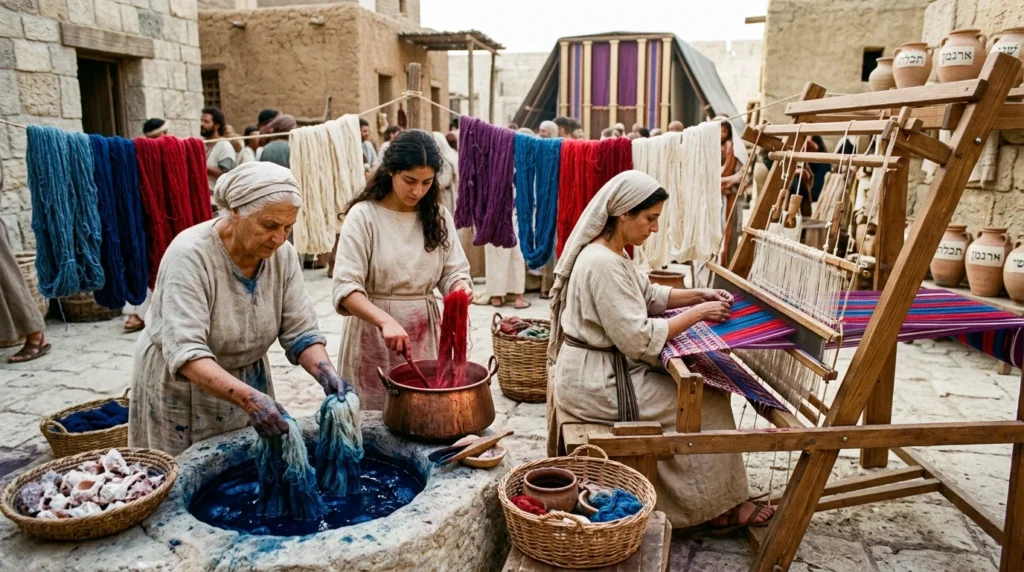
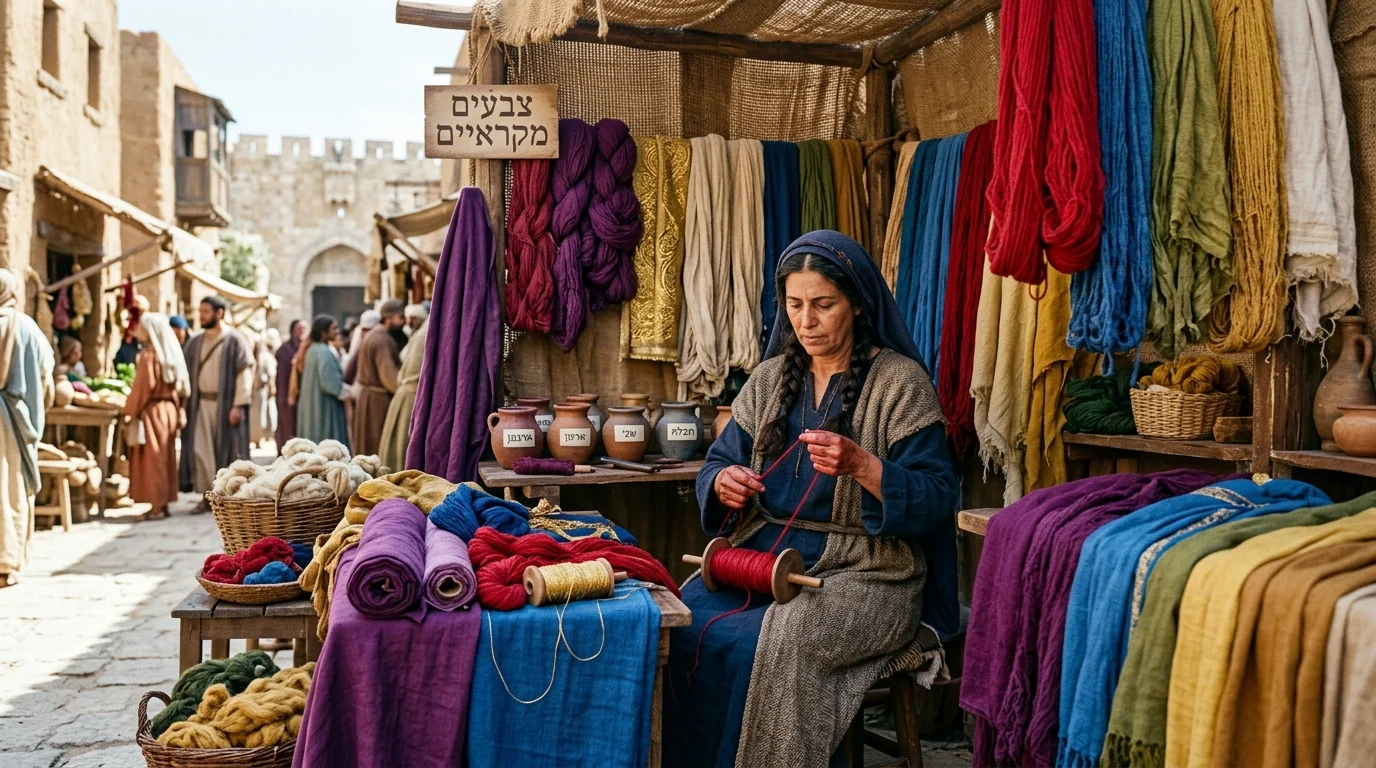
Colors played an important role in Israel’s worship, the construction of the Tabernacle and Temple, priestly garments, sacrifices, and prophetic visions.
For example, God instructed Moses to use specific colors when making the tabernacle curtains.
Exodus 26:1 (NIV) says:
“Make the tabernacle with ten curtains of finely twisted linen and blue, purple and scarlet yarn, with cherubim woven into them by a skilled worker.”
These carefully chosen colors reflected God’s holiness, majesty, and redemptive plan.
The book of Revelation also uses colors symbolically to describe heaven, worship, judgment, and eternal life.
Key References from Core Bible Books
Blue – Heaven, Obedience, and God’s Presence
Blue frequently appears in the Tabernacle, priestly garments, and sacred objects.
Numbers 15:38–39 (NIV) instructs the Israelites to wear blue tassels as a reminder to obey God’s commandments.
Blue often represents:
- Heaven
- God’s presence
- Faithfulness
- Obedience
- Divine revelation
Purple – Royalty and Kingship
Purple was an expensive dye in biblical times, making it a symbol of wealth, honour, and royalty.
Jesus was clothed in a purple robe before His crucifixion.
Mark 15:17 (NIV) says:
“They put a purple robe on him…”
Purple commonly symbolises:
- Kingship
- Royal authority
- Honour
- Majesty
Scarlet and Red – Sacrifice, Sin, and Redemption
Scarlet and red appear throughout Scripture in connection with sacrifice, blood, and redemption.
Isaiah 1:18 (NIV) says:
“Though your sins are like scarlet, they shall be as white as snow.”
These colors often represent:
- The blood of sacrifice
- Atonement
- Sin
- Redemption through Christ
White – Purity and Righteousness
White is consistently associated with holiness, victory, and eternal life.
Revelation 7:14 (NIV) says:
“They have washed their robes and made them white in the blood of the Lamb.”
White symbolises:
- Purity
- Holiness
- Forgiveness
- Victory
- Eternal life
Gold – God’s Glory and Divine Majesty
Gold decorated the Tabernacle, Temple, and sacred furnishings.
It symbolises:
- God’s glory
- Divine holiness
- Kingship
- Great value
The heavenly city in Revelation is described as being made of pure gold.
Green – Life and Growth
Green represents life, flourishing, and God’s provision.
Psalm 23:2 (NIV) says:
“He makes me lie down in green pastures…”
Green commonly symbolises:
- Spiritual growth
- Renewal
- Life
- God’s care
Black – Famine, Mourning, and Judgment
Black is often connected with sorrow and difficult times.
For example, one of the horsemen in Revelation rides a black horse associated with famine.
Although black frequently symbolises judgment or mourning, its meaning depends on the context.
Spiritual Interpretations
Colors Point to God’s Character
Many biblical colors remind readers of God’s holiness, glory, justice, mercy, and faithfulness.
Rather than focusing on mystical meanings, Scripture uses colors to reinforce spiritual truths.
The Tabernacle Reveals God’s Plan
The repeated use of blue, purple, scarlet, gold, and white in the Tabernacle points to God’s holiness and His desire to dwell among His people.
These colors also foreshadow the work of Jesus Christ.
Jesus Fulfils the Symbolism
Many Old Testament symbols—including colors connected to sacrifice, kingship, and holiness—find their ultimate fulfilment in Jesus.
His blood brings redemption, His righteousness makes believers clean, and His kingdom will never end.
Context Matters
Not every mention of a color carries symbolic meaning. Sometimes colors simply describe objects or clothing.
Always interpret colors within the context of the passage rather than assuming every occurrence has a hidden message.
Variations & Related Themes
What Do Colors Symbolise in the Bible?
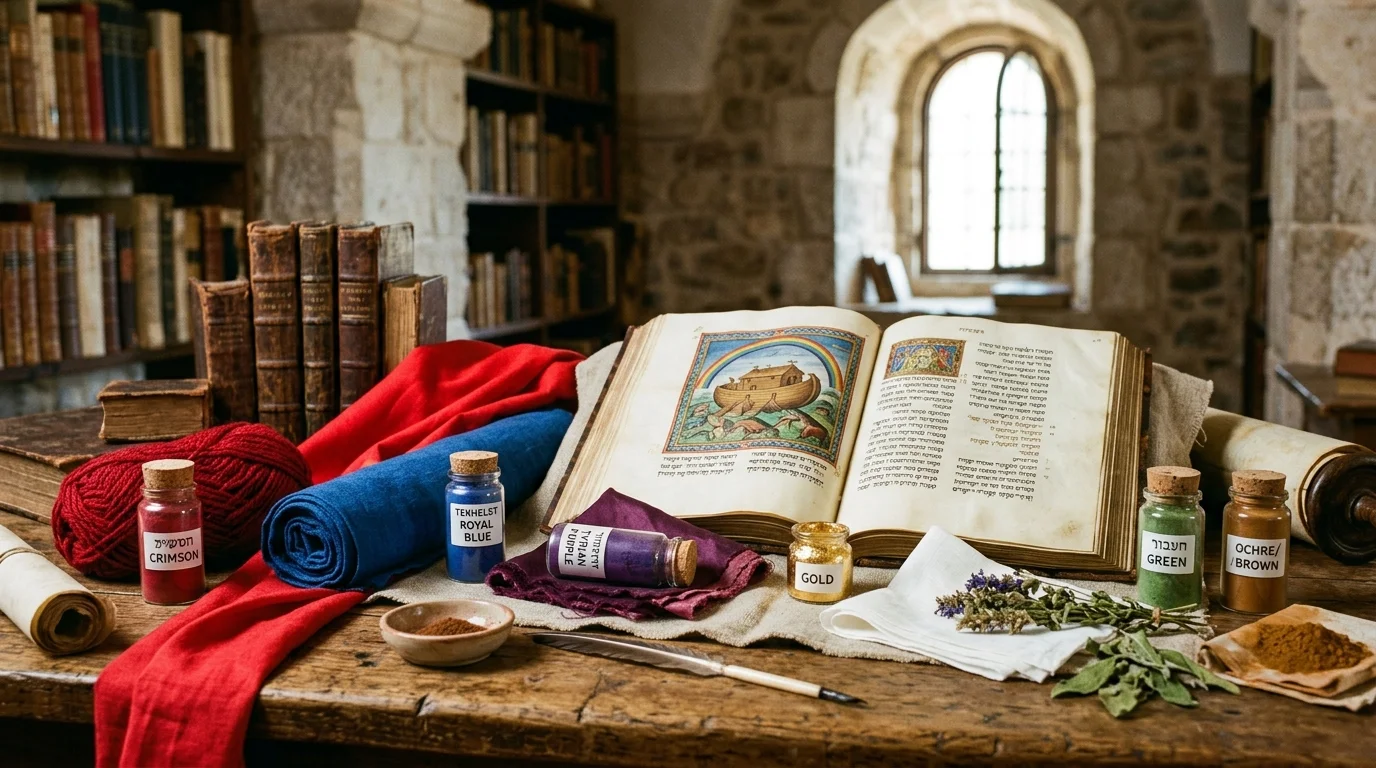
Although interpretations vary, many commonly associate:
- Blue with heaven and obedience.
- Purple with royalty.
- Scarlet/Red with sacrifice and redemption.
- White with purity and righteousness.
- Gold with God’s glory.
- Green with life and growth.
- Black with mourning or judgment.
These meanings are based on recurring biblical themes rather than explicit definitions.
Are Biblical Color Meanings Always Symbolic?
No. In many passages, colors simply describe physical objects without carrying symbolic significance.
The surrounding context determines whether symbolism is intended.
Why Are Colors Important in Scripture?
Colors help illustrate spiritual truths, enhance prophetic visions, and emphasise important themes throughout God’s redemptive story.
Frequently Asked Questions
What is the most important color in the Bible?
There is no single most important color. However, white, scarlet, blue, purple, and gold appear frequently in key passages related to worship, salvation, and God’s kingdom.
What does white represent in the Bible?
White commonly symbolises purity, holiness, forgiveness, righteousness, and victory through Jesus Christ.
What does purple mean in the Bible?
Purple often represents royalty, honour, wealth, and the kingship of Jesus Christ.
What does red symbolise in Scripture?
Red and scarlet are commonly associated with sacrifice, the blood of Christ, redemption, and, in some contexts, sin.
Does every color have a spiritual meaning?
No. While many colors have symbolic significance in certain passages, not every reference to a color is symbolic.
Why did God use colors in the Tabernacle?
The colors reflected God’s holiness, beauty, majesty, and His covenant relationship with Israel, while also pointing forward to Christ’s redemptive work.
Faith-Based Action Steps
Thank God for His Redemption
Prayer:
“Heavenly Father, thank You for the rich symbolism throughout Your Word. As I study the colors in the Bible, help me see the greater truth they reveal about Your holiness, love, mercy, and salvation through Jesus Christ. Open my heart to understand Your Word more deeply and teach me to live in obedience to You each day. Thank You for making me clean through the sacrifice of Your Son. In Jesus’ name, Amen.”
Study Scripture in Context
When you notice a color mentioned in the Bible, read the surrounding passage to understand its historical and spiritual significance.
Focus on Christ
Remember that the symbols of the Old Testament ultimately point to Jesus Christ, who fulfilled God’s plan of redemption through His life, death, and resurrection.