
Biblical Background:Locusts Bible
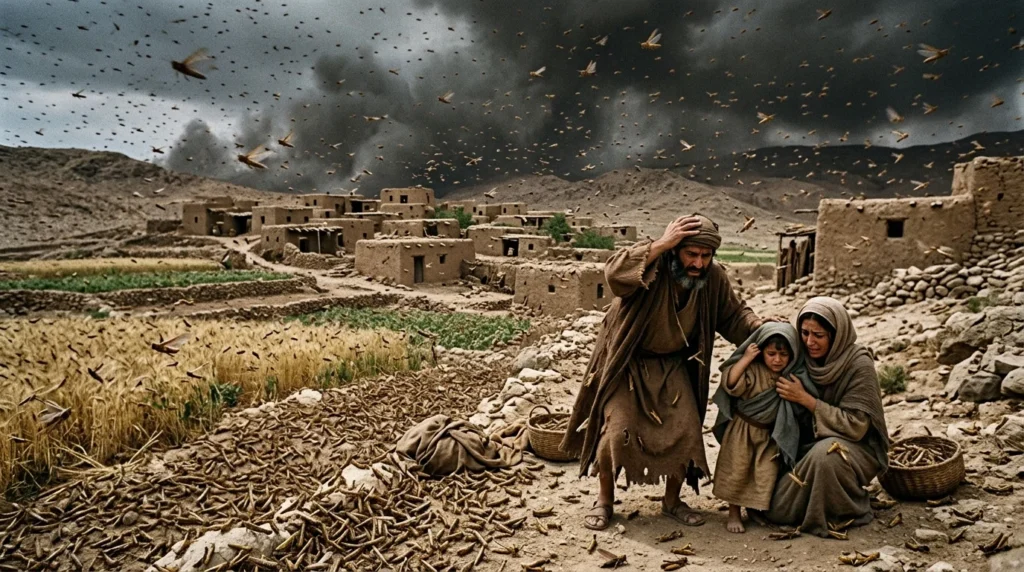
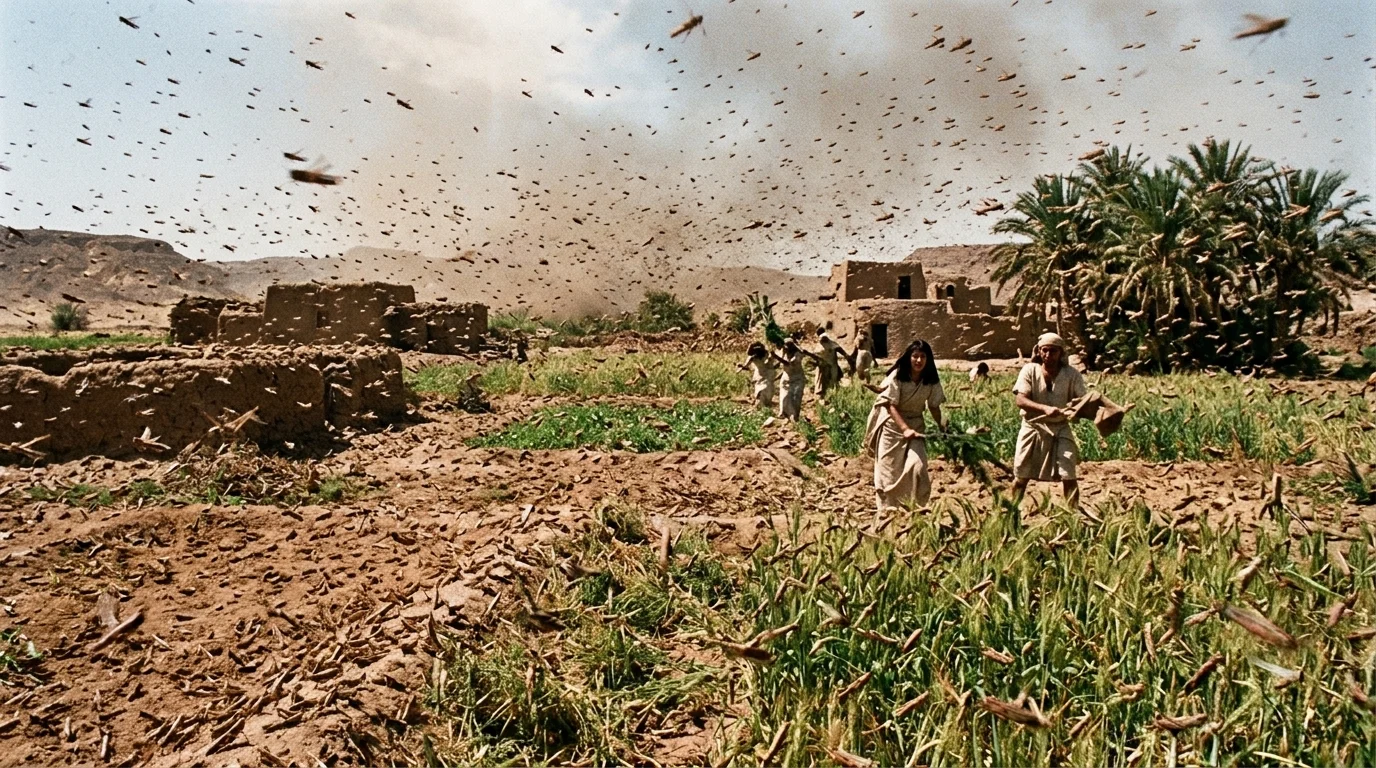
Locusts are mentioned throughout both the Old and New Testaments. One of the earliest and most well-known appearances is during the plagues of Egypt.
Exodus 10:14–15 (NIV) says:
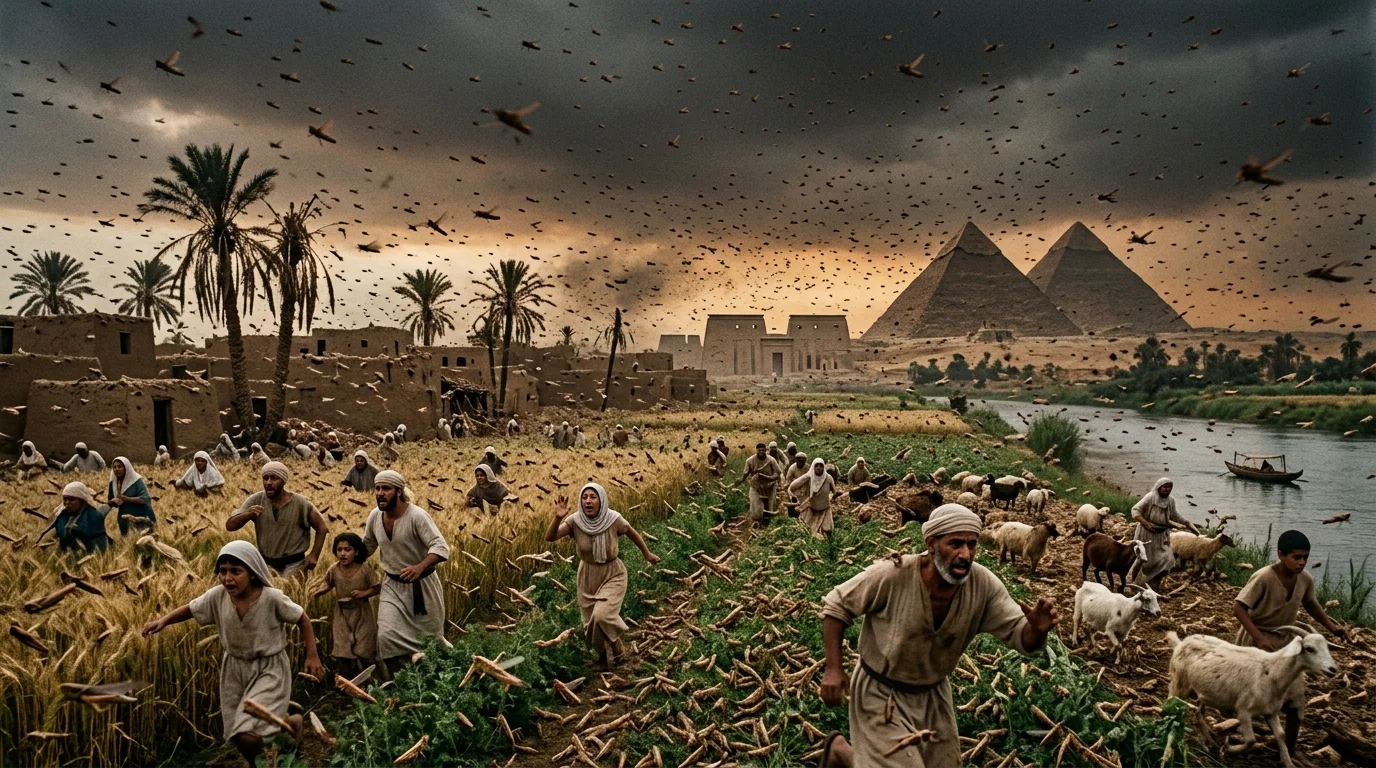
“They covered all the ground until it was black. They devoured all that was left after the hail—everything growing in the fields and the fruit on the trees. Nothing green remained…”
This was the eighth plague God sent upon Egypt to demonstrate His power and call Pharaoh to release the Israelites.
Another significant passage appears in the book of Joel, where a locust invasion becomes both a historical event and a call to repentance.
Joel 2:25 (NIV) declares:
“I will repay you for the years the locusts have eaten…”
This promise reveals that although God allowed judgment, His ultimate desire was restoration for those who returned to Him.
In the New Testament, John the Baptist ate “locusts and wild honey” (Matthew 3:4), showing that locusts could also serve as food according to the dietary laws given in Leviticus 11:22.
Key References from Core Bible Books
Joel: Judgment Followed by Restoration
The book of Joel is one of the most important places to understand the symbolism of locusts.
Joel 2:12–13 (NIV) says:
“‘Even now,’ declares the LORD, ‘return to me with all your heart…'”
Joel uses the locust plague to call God’s people to sincere repentance while offering hope that the Lord will restore what had been lost.
Exodus: God’s Power Over Nations
Exodus 10:12 (NIV) records God sending locusts over Egypt as part of the ten plagues.
This event demonstrates God’s authority over creation and His commitment to deliver His people from oppression.
Revelation: Symbolic Spiritual Imagery
The book of Revelation uses locust-like creatures in symbolic visions.
Revelation 9:3 (NIV) says:
“And out of the smoke locusts came down on the earth…”
Rather than describing ordinary insects, this passage uses vivid apocalyptic imagery to portray God’s judgment and spiritual realities.
Psalms: Remembering God’s Mighty Works
Psalm 105:34–35 (NIV) recalls the plague of locusts in Egypt as evidence of God’s sovereign power and faithfulness to His covenant people.
Spiritual Interpretations
Locusts Can Represent God’s Judgment
Joel 1:4 (NIV)
“What the locust swarm has left the great locusts have eaten…”
In several biblical passages, locusts remind people that sin has consequences. God’s judgments are never arbitrary but are intended to awaken hearts and call His people back to Him.
God Invites Repentance
Joel 2:13 (NIV)
“Return to the LORD your God, for he is gracious and compassionate…”
Even after seasons of loss, God’s invitation is one of mercy. He desires repentance, forgiveness, and renewed fellowship rather than permanent condemnation.
God Restores What Has Been Lost
Joel 2:25 (NIV)
“I will repay you for the years the locusts have eaten…”
This well-loved promise reminds believers that God can bring healing and restoration after painful seasons. While restoration may not always look exactly as expected, the Lord is faithful to redeem what has been broken according to His perfect will.
Trust God’s Sovereignty
Romans 8:28 (NIV)
“And we know that in all things God works for the good of those who love him…”
Even during difficult seasons that feel like a “locust invasion,” Christians can trust that God remains in control and is working for His good purposes.
Variations & Related Themes
The Plague of Locusts in Egypt
The locust plague in Exodus 10 was a historical judgment against Pharaoh and the gods of Egypt. It demonstrated God’s supreme authority and paved the way for Israel’s deliverance from slavery.
Locusts in Joel
Joel combines a real agricultural disaster with prophetic teaching. The devastation caused by locusts becomes a picture of spiritual urgency, calling God’s people to repentance while also proclaiming His promise of restoration.
Locusts in Revelation
The locust-like beings described in Revelation 9 are part of symbolic apocalyptic visions. Most Christian interpreters understand this imagery within the broader context of Revelation’s symbolic language rather than as ordinary insects.
DEALING WITH NEGATIVE OR TROUBLING SIGNS
Because locusts in Scripture are sometimes associated with judgment and difficult seasons, it’s understandable if these passages cause concern. However, Christians are called to respond with faith rather than fear.
Begin by remembering Psalm 91, which reminds believers that God is their refuge and protector. No matter what trials arise, the Lord remains faithful to those who trust Him.
Next, follow the instruction found in Ephesians 6:10–18 by putting on the full Armor of God. Daily prayer, reading Scripture, and trusting in Christ help believers stand firm during spiritual challenges.
If the Lord convicts you of sin, respond with sincere repentance. God’s desire is always restoration, forgiveness, and renewed fellowship through Jesus Christ.
Finally, if you are struggling to understand a difficult season or troubling passage of Scripture, seek guidance from a trusted pastor, Bible teacher, or mature Christian mentor. God often provides wisdom and encouragement through the community of believers.
Faith-Based Action Steps
Pray for God’s Wisdom and Restoration
Prayer:
“Heavenly Father, thank You for Your mercy and faithfulness. Help me trust You during seasons of loss and uncertainty. Search my heart, lead me to repentance where needed, and restore what You desire according to Your perfect will. Strengthen my faith, protect me through Your power, and help me rest in the hope found in Jesus Christ. Amen.”
Reflect on God’s Faithfulness
Take time to ask yourself:
- What difficult season has God already brought me through?
- Are there areas where He is calling me to trust Him more deeply?
- How have I experienced His restoration in the past?
Writing your answers in a journal can remind you of God’s continued faithfulness.
Stay Rooted in Christian Community
Walk alongside other believers through regular church attendance, Bible study, and prayer. Encouragement from a faithful Christian community helps strengthen hope and perseverance during life’s challenges.