
Biblical Background
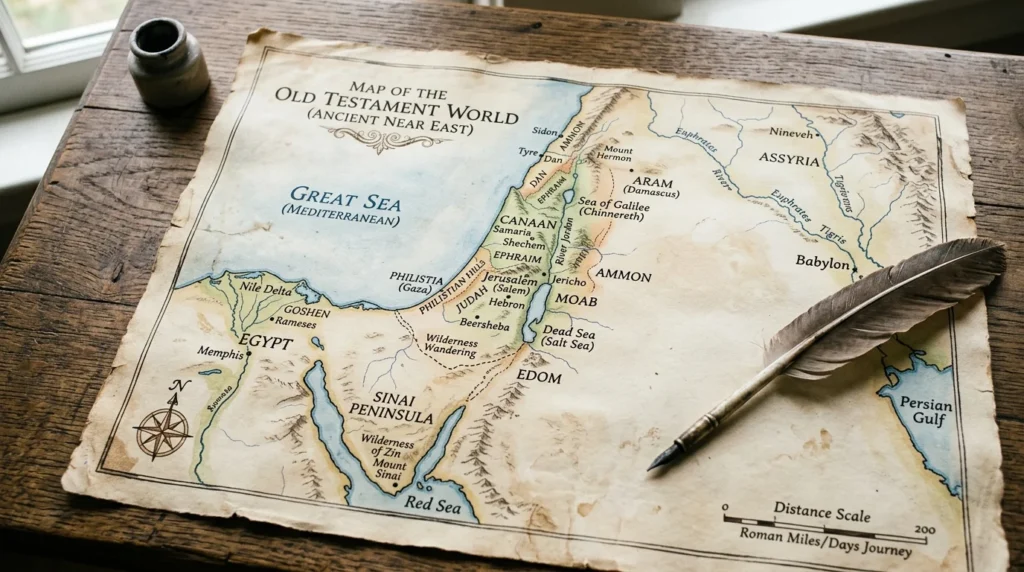
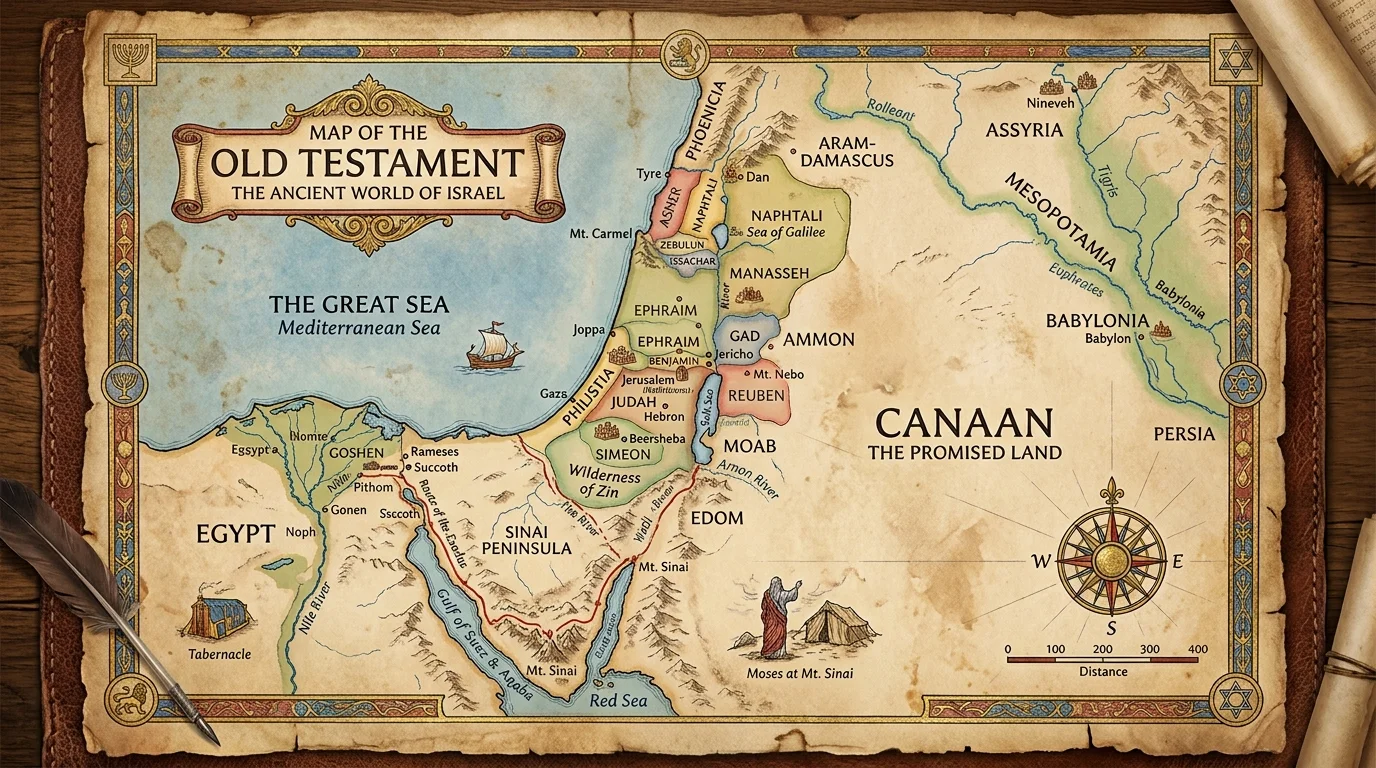
The Old Testament spans thousands of years and takes place across the ancient Near East. Many events occurred in regions that are part of present-day Israel, Palestine, Jordan, Egypt, Iraq, Syria, Lebanon, Turkey, and surrounding areas.
God often worked through specific places to accomplish His purposes. He called Abraham from Ur of the Chaldeans (Genesis 12:1–4), delivered Israel from slavery in Egypt (Exodus 12–14), gave the Law at Mount Sinai (Exodus 19–20), and led His people into the Promised Land under Joshua (Joshua 3–4).
Geography also helps explain many biblical events. Deserts, rivers, mountains, valleys, and trade routes influenced battles, migrations, agriculture, and daily life.
Psalm 121:1–2 (NIV) says:
“I lift up my eyes to the mountains—where does my help come from? My help comes from the LORD, the Maker of heaven and earth.”
Understanding the landscape of the Bible often makes passages like this even more meaningful.
Key References from Core Bible Books
Genesis: The Beginning of God’s Covenant
Genesis introduces many foundational locations, including Eden, Ararat, Babel, Ur, Haran, Canaan, and Hebron.
Abraham’s journey through these regions marks the beginning of God’s covenant people.
Exodus: From Egypt to Mount Sinai
The book of Exodus traces Israel’s deliverance from Egypt, the crossing of the Red Sea, and the journey to Mount Sinai, where God gave the Ten Commandments.
These locations demonstrate God’s power, guidance, and covenant faithfulness.
Psalms: The Land as a Reminder of God’s Care
Many psalms refer to Jerusalem, Zion, mountains, rivers, and wilderness places as symbols of God’s protection and presence.
The geography of Israel often reflects spiritual truths about trusting the Lord.
Isaiah: Nations and God’s Sovereignty
Isaiah mentions kingdoms such as Assyria, Babylon, and Jerusalem, showing that God rules over every nation and fulfills His purposes throughout history.
Spiritual Interpretations
The Promised Land Reflects God’s Faithfulness
Joshua 21:45 (NIV)
“Not one of all the LORD’s good promises to Israel failed; every one was fulfilled.”
The Promised Land reminds believers that God keeps every promise He makes. His faithfulness extends from biblical history into the lives of Christians today.
The Wilderness Teaches Dependence on God
Deuteronomy 8:2 (NIV)
“Remember how the LORD your God led you all the way in the wilderness these forty years…”
Israel’s journey through the wilderness reveals that God often uses difficult seasons to teach trust, humility, and obedience.
Jerusalem Points to God’s Presence
Psalm 122:6 (NIV)
“Pray for the peace of Jerusalem: ‘May those who love you be secure.'”
Jerusalem became the spiritual center of Israel’s worship. It reminds believers of God’s desire to dwell with His people.
Every Journey Reveals God’s Guidance
Proverbs 3:5–6 (NIV)
“Trust in the LORD with all your heart… and he will make your paths straight.”
The many journeys recorded on Old Testament maps illustrate how God faithfully directed His people. He continues to guide believers who seek Him today.
Variations & Related Themes
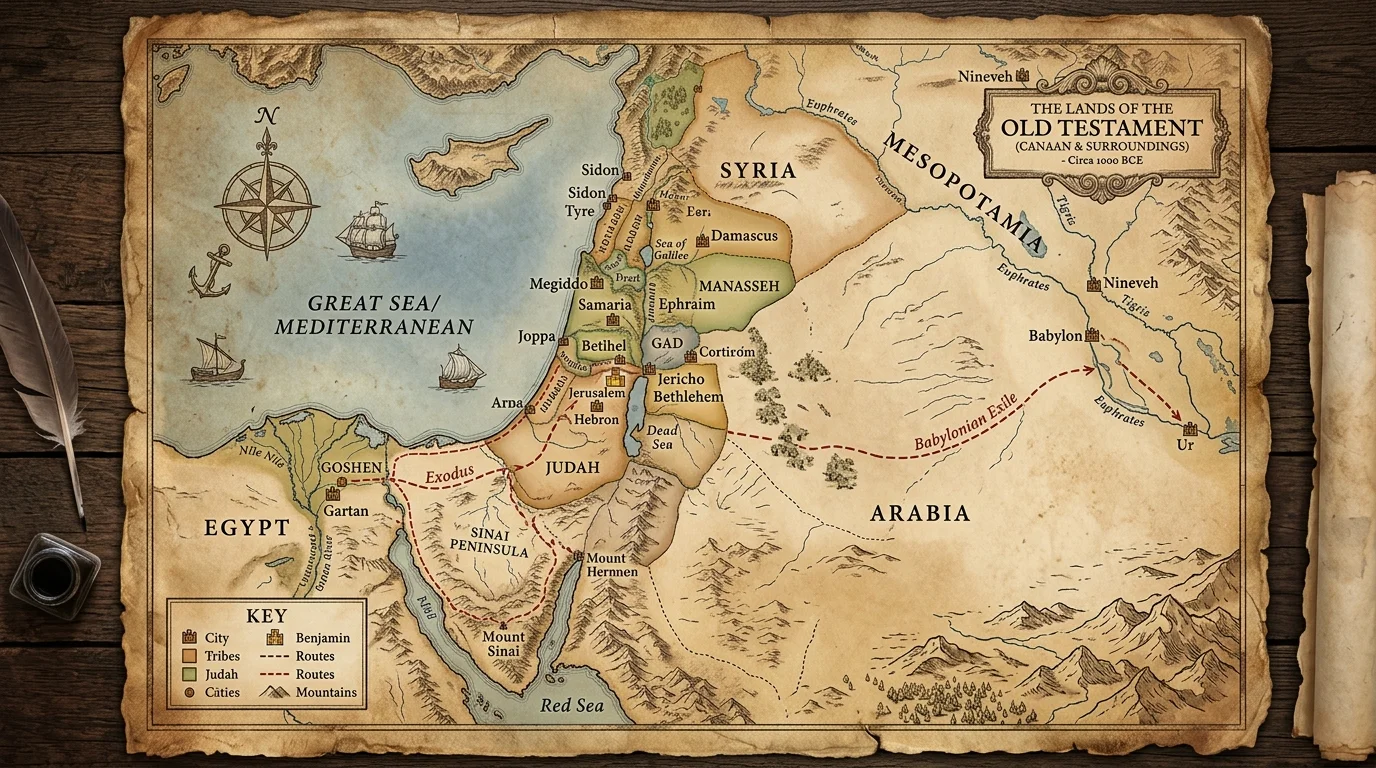
Major Places on an Old Testament Bible Map
Some of the most important locations include:
- The Garden of Eden
- Ur of the Chaldeans
- Haran
- Canaan
- Egypt
- Mount Sinai
- Jericho
- Jerusalem
- Bethlehem
- Hebron
- Babylon
- Nineveh
- Samaria
- The Jordan River
- The Dead Sea
Each location contributes to the larger story of God’s relationship with His people.
Maps of Abraham’s Journey
Many Bible maps trace Abraham’s travels from Ur to Haran and eventually into Canaan, illustrating God’s call and covenant promises recorded in Genesis.
Maps of the Exodus
Exodus maps generally follow Israel’s departure from Egypt, the crossing of the Red Sea, the wilderness journey, and their arrival near the Promised Land.
Faith-Based Action Steps
Pray Before Studying Scripture
Prayer:
“Heavenly Father, thank You for revealing Yourself through Your Word and through the history recorded in Scripture. As I study the places of the Old Testament, help me see not only the geography but also Your faithfulness, wisdom, and love. Open my heart to understand Your truth and strengthen my faith as I follow Jesus each day. In His name, Amen.”
Read With a Bible Map Nearby
As you read Genesis, Exodus, Joshua, Kings, or the Prophets, compare the passages with an Old Testament Bible map. Visualizing the locations can help you better understand the journeys, battles, and historical events.
Study With Other Believers
Join a Bible study or Sunday school class that explores biblical geography and history. Learning together can deepen your understanding of Scripture and encourage meaningful discussion.