
Biblical Background:Myrtle Tree in the Bible
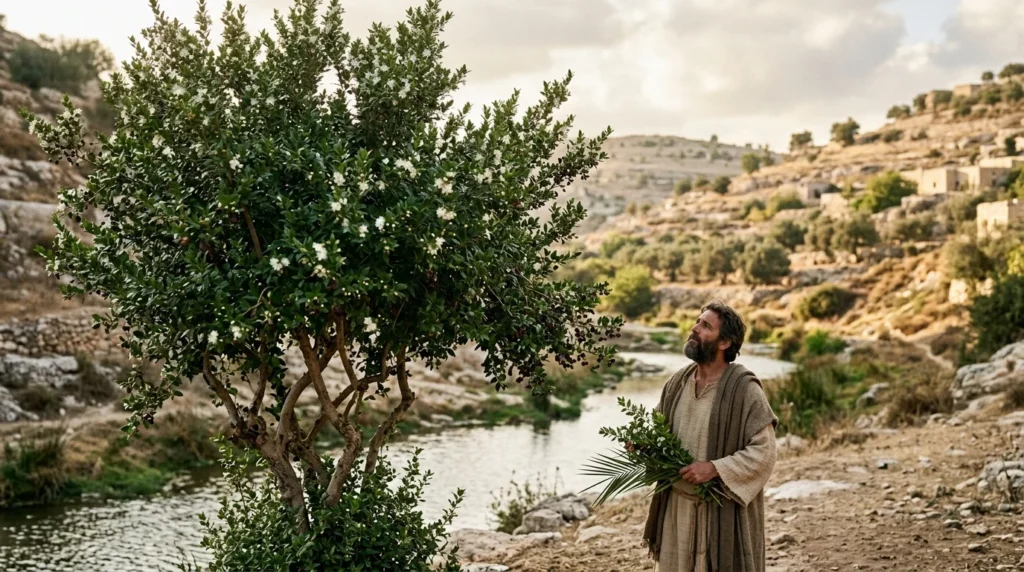
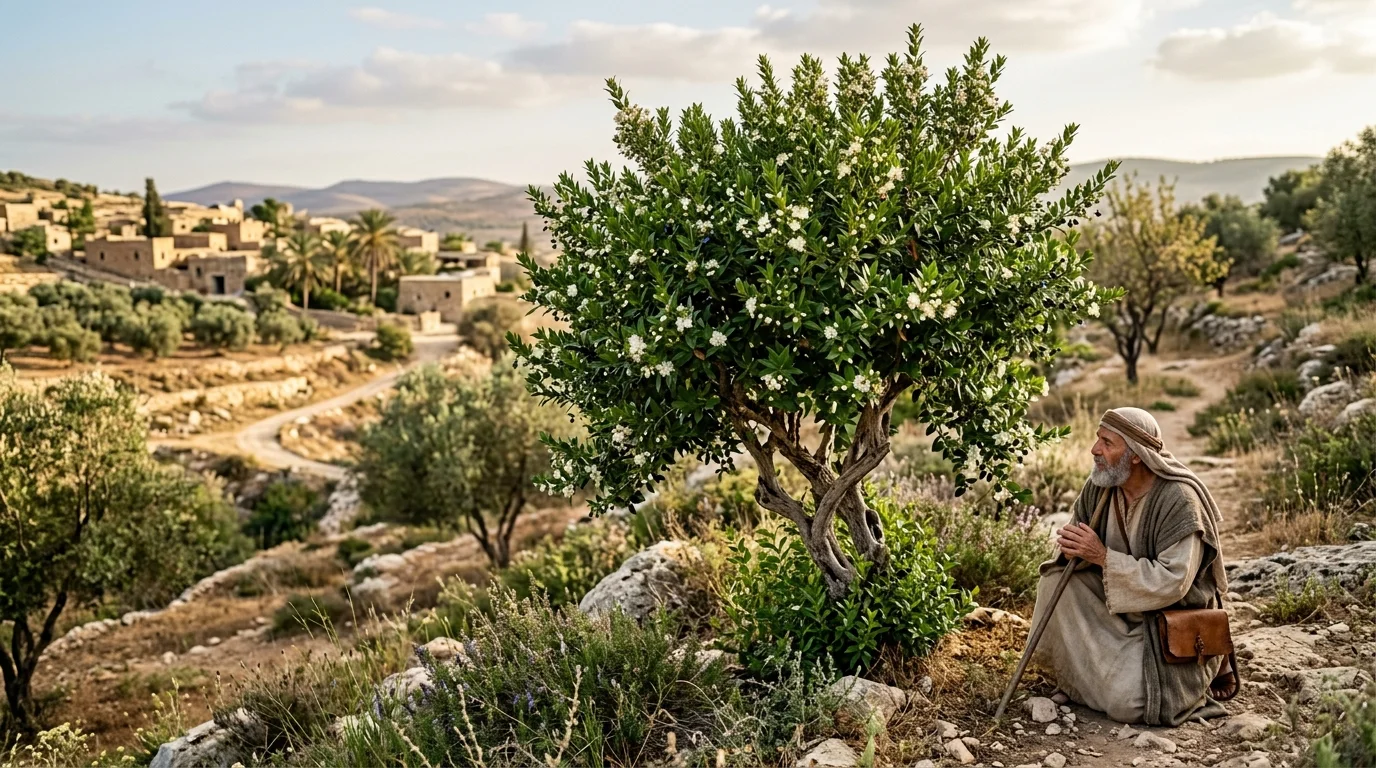
The myrtle tree was familiar to the people of ancient Israel and grew naturally in the hills and valleys of the region. It was used during religious celebrations and became a symbol of joy and restoration.
One of its most significant appearances is during the Feast of Tabernacles, when the Israelites were instructed to gather branches from various trees.
Nehemiah 8:15 (NIV) says:
“Go out into the hill country and bring back branches from olive and wild olive trees, and from myrtles, palms and shade trees, to make temporary shelters…”
The myrtle tree also appears in prophetic visions that point to God’s care for His people and His future restoration of creation.
Where Is the Myrtle Tree Mentioned in the Bible?
Nehemiah 8:15 – The Feast of Tabernacles
During the rebuilding of Jerusalem, the Israelites celebrated the Feast of Tabernacles by constructing temporary shelters using branches from several trees, including myrtle.
Spiritual Lesson
The myrtle tree reminds believers of:
- God’s provision
- Joyful worship
- Remembering God’s faithfulness
- Celebrating His protection
Zechariah 1:8–11 – The Vision of the Myrtle Trees
One of the most well-known references appears in Zechariah’s vision.
The prophet saw:
“A man mounted on a red horse… standing among the myrtle trees in a ravine.” — Zechariah 1:8 (NIV)
The rider is identified as the Angel of the Lord, while other horses report that the earth is at peace.
Spiritual Meaning
Many Bible scholars understand the myrtle trees in this vision as representing God’s people living humbly while remaining under His watchful care.
The vision emphasizes:
- God’s presence
- His knowledge of world events
- His promise to restore Jerusalem
Isaiah 41:19 – A Promise of Restoration
God promises to transform barren places.
“I will put in the desert the cedar and the acacia, the myrtle and the olive.”
Meaning
The myrtle tree symbolizes God’s ability to bring life where there was once emptiness.
It points to:
- Renewal
- Hope
- Divine blessing
- God’s creative power
Isaiah 55:13 – Beauty Instead of Thorns
One of the Bible’s most beautiful promises says:
“Instead of the thornbush will grow the juniper, and instead of briers the myrtle will grow.”
Spiritual Lesson
This passage illustrates how God replaces sorrow with joy and judgment with blessing.
It represents:
- Redemption
- Spiritual renewal
- Lasting peace
- God’s transforming grace
What Does the Myrtle Tree Symbolize in the Bible?
Peace
Because it is evergreen and fragrant, the myrtle tree became associated with peace and God’s abiding presence.
It reminds believers that God’s peace remains even during difficult seasons.
Restoration
The myrtle appears in passages where God promises to restore His people and renew the land.
It represents new beginnings after hardship.
Joy
During the Feast of Tabernacles, myrtle branches were part of Israel’s joyful celebration before the Lord.
The tree therefore symbolizes worship and gratitude.
God’s Faithfulness
The myrtle tree points to God’s covenant faithfulness. Even when His people experienced exile or suffering, God promised restoration and hope.
Everlasting Hope
Unlike thorn bushes, which often symbolize judgment or hardship, the myrtle represents flourishing life under God’s blessing.
Spiritual Lessons from the Myrtle Tree
God Brings Beauty from Brokenness
Isaiah’s prophecy reminds believers that God can transform painful situations into testimonies of His grace.
God’s Presence Brings Peace
Zechariah’s vision assures believers that God watches over His people, even when circumstances seem uncertain.
Hope Is Always Available
The evergreen nature of the myrtle serves as a reminder that God’s promises remain alive and dependable.
Worship Includes Remembering God’s Faithfulness
The use of myrtle branches during the Feast of Tabernacles encouraged Israel to remember how God had cared for them throughout their journey.
Myrtle Tree Compared with Other Biblical Trees
| Tree | Biblical Symbolism |
|---|---|
| Myrtle | Peace, restoration, blessing |
| Olive | God’s covenant, anointing, peace |
| Cedar | Strength, majesty, stability |
| Palm | Victory, praise, righteousness |
| Fig | Prosperity, fruitfulness |
| Vine | Spiritual life and dependence on God |
Each tree carries its own symbolism, but the myrtle uniquely emphasizes renewal and joyful restoration.
Frequently Asked Questions
What does the myrtle tree symbolize in the Bible?
The myrtle tree symbolizes peace, restoration, hope, blessing, and God’s faithfulness toward His people.
Where is the myrtle tree mentioned in the Bible?
The myrtle tree appears in Nehemiah 8:15, Zechariah 1:8–11, Isaiah 41:19, and Isaiah 55:13.
Why was the myrtle tree important during the Feast of Tabernacles?
Its branches were used to build temporary shelters as the Israelites celebrated God’s provision and remembered His care during their wilderness journey.
What does Zechariah’s vision of the myrtle trees mean?
The vision emphasizes God’s presence among His people and His promise to restore Jerusalem after a time of judgment.
Is the myrtle tree a symbol of Jesus?
The Bible does not directly identify the myrtle tree as a symbol of Jesus. However, its themes of peace, restoration, and hope reflect blessings that Christians believe are ultimately fulfilled through Christ.
What spiritual lesson can Christians learn from the myrtle tree?
The myrtle tree reminds believers that God can bring renewal after hardship, replace sorrow with joy, and remain faithful to His promises.
Faith-Based Action Steps
Prayer
Heavenly Father, thank You for Your faithfulness and the hope You give through Your Word. Just as the myrtle tree symbolizes restoration and peace, help me trust that You can bring beauty from difficult seasons in my life. Strengthen my faith, renew my heart, and remind me that Your promises never fail. In Jesus’ name, Amen.”
Reflect on God’s Faithfulness
Take time to remember ways God has provided, guided, and restored you in the past.
Trust God’s Timing
Even when life feels uncertain, remember that God is able to bring renewal and hope in His perfect time.
Share God’s Hope
Encourage someone who is going through a difficult season by sharing Scriptures about God’s restoration and faithfulness.